This autumn, writer Saleha joined a Writing Our Legacy network gathering trip to see Period Parrrty, a debut play by Gayathiri Kamalakanthan at Soho Theatre, London. Saleha’s review is a Writing Our Legacy Creative Commission.
When I read the synopsis for Period Parrrty, I felt instantly drawn to the plot: a story of a non-binary Tamil teenager about to have a period party, a celebration marking womanhood. I wasn’t aware of these celebrations in Hinduism and felt curious to learn more. Considering how little gender identity is discussed openly within the South Asian community, I wanted to see how this character navigated both their sexuality and gender struggles within the context of their family, culture and religion.
On the evening of the play, I felt a rush of excitement upon entering Soho. I walked through the buzz of the city amongst bustling crowds and felt drawn to the festive atmosphere, with all the Christmas lights on display. It was a novel experience to be invited to review a play, and to be amongst other writers at Writing Our Legacy. We had some pre-show drinks in the cosy bar and shared a little bit about our writing backgrounds before heading upstairs to see the show.
Period Parrrty is a tale of a romance between two characters Krish, who is non-binary and their trusted best friend, Brenavee. With the presence of a small audience and the proximity of the stage, the energy in the room and the connection between the actors and the audience felt very intimate. I loved the chemistry on stage between them and found it very natural, each with strikingly different personalities, both coming together to understand one another. I also found the relationship on stage between Krish and her mother very convincing and loved that there were whole conversations in Tamil, which I didn’t understand but didn’t feel the need to. There was so much communicated beautifully through body language, facial expressions and intonations within the dialogue, which helped me gauge an understanding of some of these conversations.
From the outset, I found myself in fits of laughter and was deeply engaged and entertained by the play. Despite having different struggles as a South Asian teenager trying to understand myself, my identity and sexuality within a Muslim household, I did feel a deep sense of connection with certain aspects of the play. Some of the deeper undertones were very similar to my own experiences and felt very relatable. Conversations around a mother’s expectations for their child, within the bounds of familial, cultural and religious traditions brought back memories of my own teenage struggles. This was a coming-of-age story at a period in time when some of the topics around sexuality and gender in such minority groups were pretty much non-existent and massively taboo. To make a play of this nature so accessible and entertaining felt compelling.
Growing up, I didn’t know where I belonged. I didn’t quite fit in with the Indian and Pakistani culture I’d inherited, nor the conservative religious ways of my parents and their community. It was rare to see these themes depicted on TV or written about in books. That’s what makes plays like this so important. There will be someone out there struggling to understand their own sexuality, queerness or gender – who might be South Asian or not – who will find themselves in this story. This is a story that may instill hope and create space for these difficult conversations to be had and for individuals to be their authentic selves despite conflicting views held by their family, culture or religion – that is powerful.
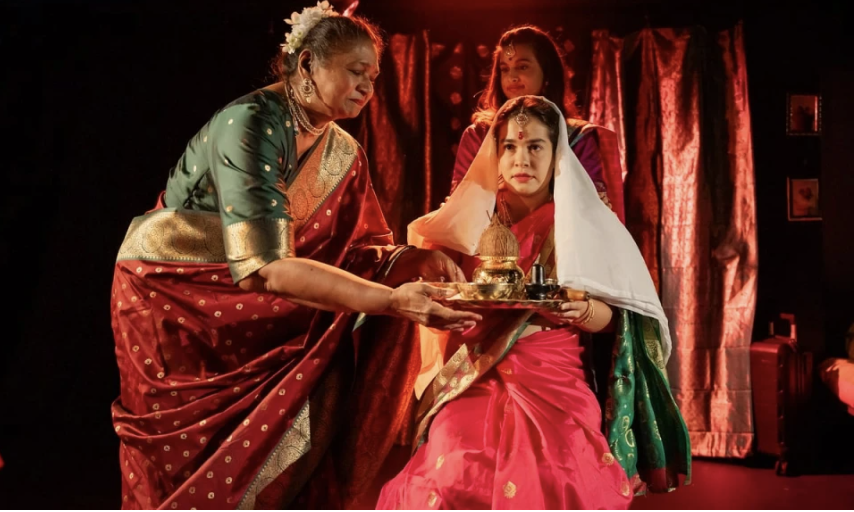
 Photo credit (main photo): Rani Moorth, Tanvi Virmani and Elizabeth Green in Period Parrrty. Photographer: Ikin Yum. Photo courtesy of Soho Theatre.
About the writer
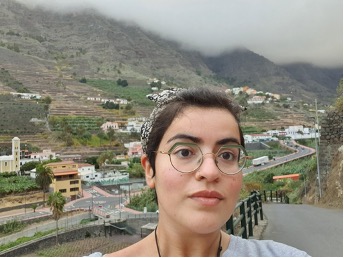 Saleha is an artist and writer who has found healing and purpose through nurturing their creative practice. Saleha has felt inspired to share their experiences of mental illness through poetry, painting and memoir writing. These practices have become a way for them to connect with the world during periods of severe depression and psychosis; they are now paramount to their well-being.
Their work aims to connect with those who have felt ostracised by experiences of mental illness, especially within the South Asian community. Sharing their journey, as a South Asian woman, has felt empowering as they aim to represent unheard voices. Through healing, their hope is to inspire collective healing in communities affected by mental illness.
Saleha writes:
‘I want the wider community to gain insight into the struggles experienced by an individual in a mental health crisis but ultimately, I want to share all of the beauty and hope that’s possible during a period of post-traumatic growth. I hope that my work inspires others who’ve lost hope and faced the struggles of isolation, mental distress and trauma to find a sense of connection and have their voices heard.’