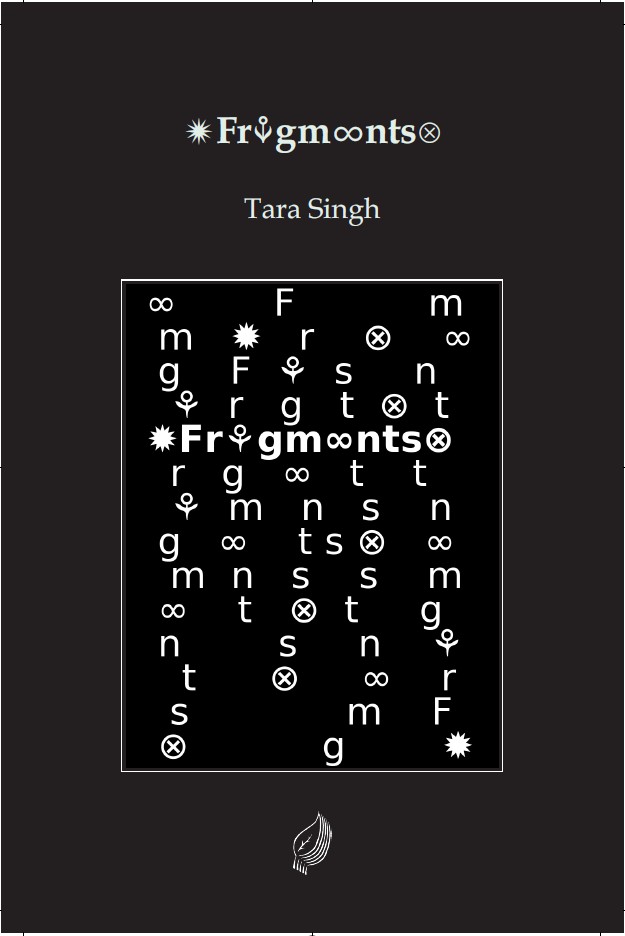
London-based poet Daniella Fearon offers her take on Tara Singh’s debut poetry collection, ✹Fr⚘gm∞nts⊗, published in 2025 by Five Leaves Publications. Daniella’s review is a Writing Our Legacy Creative Commission.
From the moment you open✹Fr⚘gm∞nts⊗, you are immersed in the layers of memory and the pervasiveness of bodily trauma. The innovative form of each poem captures the essence of fragmented memory. Many poems use line and word placement to embody the theme and have concrete elements that are evocative, particularly in ‘O Holy Night’. The voice in each poem resonates through first-person and direct address, which allows the reader to become part of the different stages of trauma and survival.
Singh creates their own poetics through symbols and words, which have a soothing and ritualistic quality. The reader becomes witness to the spell of survival as symbols engage with lingering evil spirits and function as a way of purging them. The pamphlet is broken down into sections for each symbolic response, ranging from ‘Fight’ to ‘Befriend’. The symbolic language of the poems is also a way of subtly communicating the turmoil of language attrition upon migration, where the mother tongue is suppressed.
The pamphlet brings to mind the notion of re-memory and the magic realism explored in Toni Morrison’s novel Beloved. It made me consider how experiences are recalled differently; you can never quite recollect them the same way because of the fragmentation that occurs over time. Narratives are framed through the lens of the individual; therefore, we process and remember them in varying ways. Moreover, the bodily trauma explored in ✹Fr⚘gm∞nts⊗ reminded me of Beloved’s protagonist Sethe’s bodily trauma – it is as though she is giving birth again as the past is physically embodied. Trauma of the past never really settles; it resurfaces and disrupts equilibrium, feeling too tangible, almost like living in limbo between past and present.
Singh uses bold, brave and vivid sensory imagery. The bodily fluids we often skirt around in conversations are laid bare and not something to apologise for or conceal. We often feel isolated because conversations go unsaid and lie dormant for too long out of embarrassment or fear of rejection, yet those are the parts that shape us. The apologetic nature of some of the poems really puts societal stigma into perspective.
The poems expose the complexities of the body and the yearning for what we perceive to be a more functional body, whilst highlighting how our bodies are the fabric of our history. Singh explores the turmoil of learning to embrace the scars and letting them elevate us rather than own us.
There is something surreal yet so visceral about the poem in which cancer is kicked out ‘(& so we bludgeon a cancer to death with a brick)’. Those internal instincts, wanting to retaliate and rid the presence of illness that takes more dominance than another being; the personification is highly effective at conveying this, along with the dark imagery. The disease is depicted as one of the monsters that plague us and can be expelled, making the poem liberating.
Reading the collection resonated and evoked memories of my own familial trauma. Stitches from childhood school wounds, family dementia, illnesses and hospitalisation. Singh is skilled at presenting unexpected circumstances. There are so many facets of self that unravel in the poems. Nonetheless, these poems remind us that accidents and illnesses define our very being, making us resilient, whilst moulding the self.
The poems raise issues of displacement and capture the reality of immigrant family life. The maintenance of culture mostly takes place in the home, where families share ties through food, conversation, artefacts and rituals. Singh communicates how the home is isolated and othered in a new community. I like the reference to how home is mobile in ‘Samson,’ communicating that it is the interior that matters (the history made through familial life). It is reminiscent of lockdown, when, for some, everything revolved around the familial space, which oscillated between suffocating and soothing due to health fears and the tension that came with proximity. The poems speak to the claustrophobia of the domestic sphere. Coming from an immigrant background myself, I considered the yearning for what we perceive as normality due to assimilation, and how freedom comes from accepting that it is okay to be different.
The childhood reflections are especially poignant. Singh captures childhood isolation well through the metaphor of a frustrated mermaid desperate to touch water, waiting for those pockets of time to be liberated from the weight of the daily struggles. The collection poignantly conveys the raw nature of the past and the struggle to disassociate whilst illuminating the refreshing nature of cycles that re-memory undergoes.
Singh innovates traditional forms such as the tercet, couplet, and haibun by using line breaks and enjambment to capture thematic concerns. Moreover, Singh creates their own unique and ingenious forms that speak to the fracturing nature of memory. Listing poems serves as a recipe for survival. Whilst the pamphlet flows due to natural rhythms created from assonance, alliteration and occasional internal rhyme.
I loved the mirror poem ‘The False Memory Fairy Tale’, a poem that can be read vertically and horizontally. The phrasing is not duplicated to invoke exact symmetry, thereby innovating the form. The repetition is pervasive, effectively relating layers of internal conflict and exploring the nuances of familial relationships.
Whether you are an avid poetry reader or new to the form, this is a pamphlet that demands attention and submerges you into the complexities of human existence.
About the writer
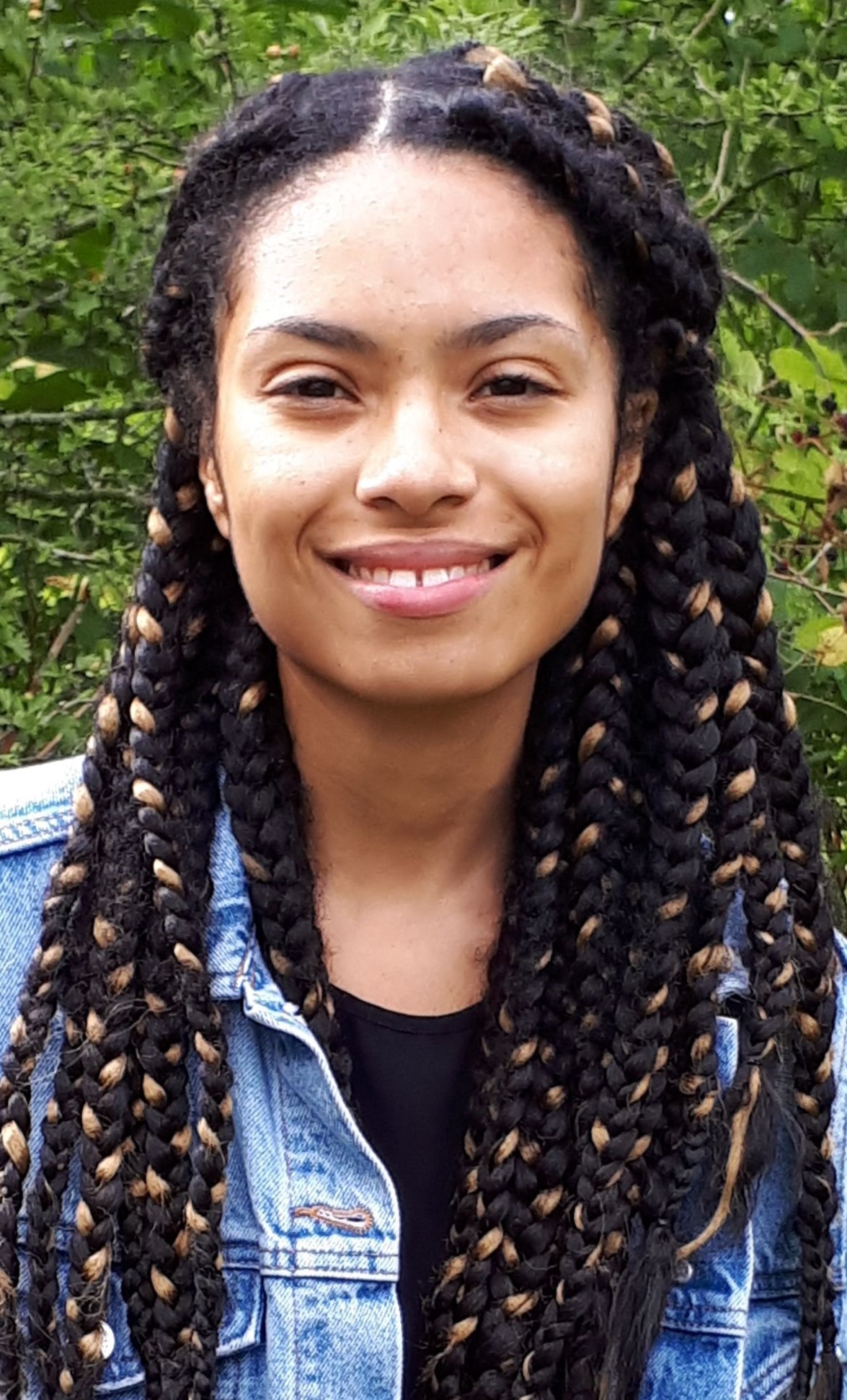
Daniella Fearon is a London-based poet with a BA in English and Creative Writing and an MA in Creative Writing. She is a recipient of the 2022 Eric Gregory Award for poetry from the Society of Authors. In 2024, her collaborative short film, commissioned from a poem for Poetry vs Colonialism, won the StAnza on Screen festival award. Her poetry has featured in Bath Magg, Poetry vs Colonialism anthology, Fusebox festival and UAL Encoding Decoding exhibition. She is a participant in Writing Our Legacy’s Covert Talent Development Programme 2026.