
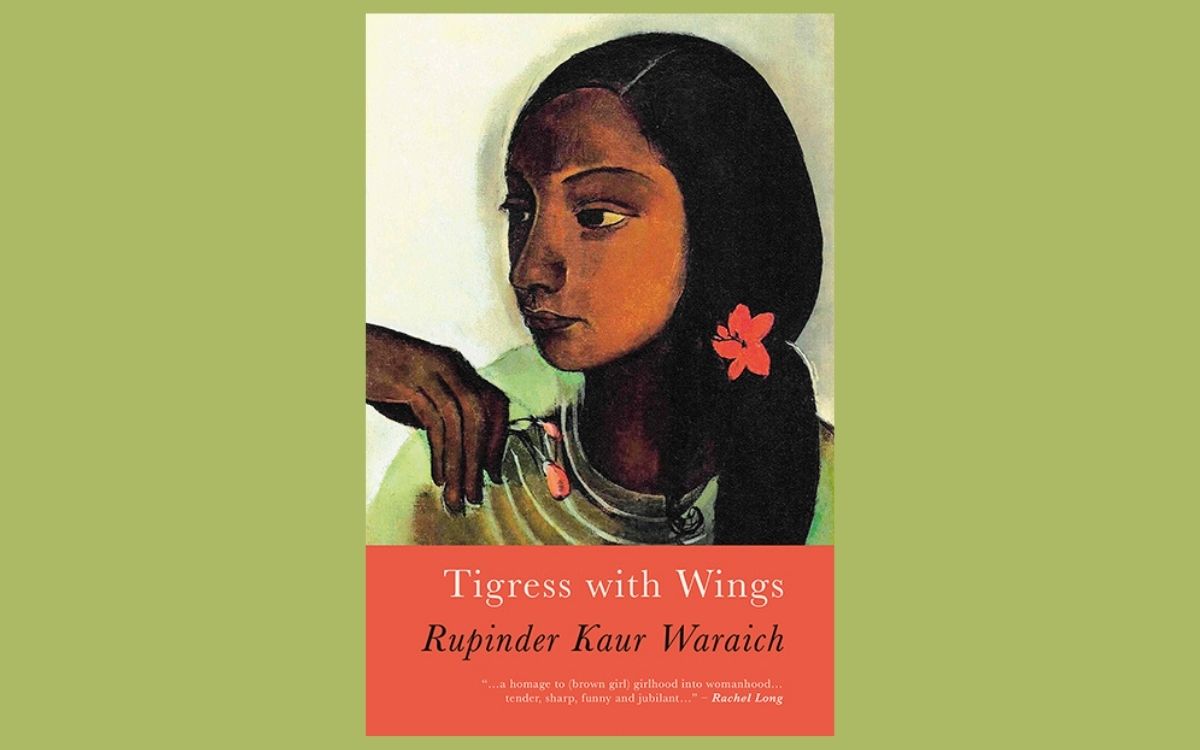
West Midlands-based poet and researcher Ramsha Ashraf offers her take on Rupinder Kaur Waraich’s poetry collection, Tigress with Wings, published in 2026 by Seren Books. Ramsha’s review is a Writing Our Legacy Creative Commission.
Rupinder Kaur Waraich’s recent poetry collection Tigress with Wings invites readers to embark on a journey that is honest yet rebellious, unconventional yet rooted in the knowledge of tradition and deeply serious yet funny.
The collection entails forty-three poems and is divided in four distinct yet connected sections: Origin, The Other Side, Wings and Tigress. Hungarian-Indian painter Amrita Sher-Gil’s Portrait of a Girl with Flower, 1936 as the book cover opens the door for readers’ imagination and stays with them until the very last poem of the collection, while the celebrated Panjabi poet Amrita Pritam’s words foreshadow the celebration of free-spiritedness that becomes home for the poet and for the readers as well:
‘ਿਜੱਥੇ ਵੀ ਸੁਤੰਤਰ ਰੂਹ ਦੀ ਝਲਕ ਪਵੇ ਸਮਝਣਾਂ ਉਹ ਮੇਰਾ ਘਰ ਹੈ
wherever you catch a glimpse of a free spirit know that is my home.’
– Amrita Pritam
Rupinder Kaur Waraich is a poet and artist based in West Midlands. Her work proffers cross-pollination of various forms and genres including poetry, art, dance and theatre with a holistic emphasis on the feminine. Tigress with Wings reflects the intersection of art, poetry, folklore and musicality, providing readers with multiple layers to unpack.
Poems in the first section, The Origin, read as an intimate conversation, of the self with a desired self, imbued with innocence, nostalgia and childlike brevity. Throughout the collection, mother remains a central presence not only literally but also metaphorically. In ‘Trace’, there is a plausible possibility of her, the mother, assuming the role of a goddess:
‘Did she become a Goddess once away from the men?’
However, in ‘Travelling Jhumke’, there are suggestions that perhaps the mother ‘was a dancer in her past life. A Kathak dancer’ or perhaps ‘a singer’. This potent and transformative nexus – which inspires ‘I’m Turning into Mum or Mum is Turning into Me’ – of mother, goddess and artist seems inevitable as we progress through in this journey. All sharing various shades and capacities to create.
Submergence of present and past is done so skilfully that it requires the reader to be indulged fully and consciously to decipher the nuance. At this point, this is not just poetic exploration, rather it becomes a meditation on art, creation and freedom. A catalyst for the discussion, which is larger than form and is the manifestation of the essence of life itself. At the end of this section, ‘A Short Tale’, offers a poignant and relatable bridge:
‘My mum lives upstairs, my Dad downstairs.
I am the stairs between them.’
The Other Side portrays another dimension of this organic growth. A body that is in the process of becoming. An existence striving to explore what it really wants and desires. In ‘Madder Red Dreams’, Amrita Sher Gil makes an appearance, and ‘brown boobs’ have been painted, perhaps for the first time.
In ‘Heer, Sassi, Sohni, Sahiban’, the eternal women lovers of Panjab, are paid a homage, while in ‘Letter to Amrita Pritam’, Rupinder drafts a letter to Amrita Pritam asking her what kind of love abides by the rules and regulations?
In ‘Pause’, there is a subtle lamentation of the passing of time: ‘Jawani, the moment you realise it, is already gone’ and it makes an appearance in ‘My Girlhood Was Mine First’ ‘where did my 20s go’. It is set alongside a loud rejection of unrealistic beauty norms thrust upon women’s bodies by society:
‘…Be natural. Botox sales
rocketing high. Lip fillers are a new norm
does every girl want them? I just want lip gloss.
Tik Tokers nose jobs going viral. I’m watching
videos on decentring men. What is left: a haunting
mess, taking a gardener years to find all the scattered
flowers. I remember looking at myself smiling.’
By the end of this section, there is a certainty regarding the beginning of an end, in the poem ‘We Were Once Great Artists’:
‘We now know what we want from life.
Can we make love one last time?’
In Wings, the third section, the ‘end of girlhood’ and the complexity of womanhood is woven with multiple enquiries including: ‘What is the cost of rebelling? Uncertainty’ (‘Three Minutes’). The poetic expression becomes experimental and foretelling in this section. Ghazals are horizontal from now onwards and the boxes are drawn (‘Which Body’) while rules are negotiated before they are finally declared redundant and untruthful. The transformation in poetic form can be witnessed as it grows wings and gets ready before the tigress can take the flight. The climax of the becoming is nearer. The fears, social or otherwise, are being torn off:
‘No permission asked. Just a woman loving a woman.’ (‘Femme Fatale’)
Finally, the closure arrives as the acknowledgement of her becoming ‘a rebellious woman’ is declared (‘ਭੋਲੀ– ਭਾਲੀ’).
The last section, Tigress, is a consolidation. A confidant, self-assured voice, ‘a woman writes her own story’ (‘Ghazal: Sinful Woman’) accounting for her ‘rebirth’ in a land where she belongs. She writes about ‘the long journeys’ (‘Inside My Body’) which made her body exhausted, she writes about a place where ‘there is no partition’ and where she has returned to her ‘mother tongue’. A circle is about to be complete. The poetic pilgrimage ‘to Chenab, the river of lovers’ (‘Where is home in the Ocean?’) drawing near to an accomplishment, and hence there is a call:
‘…We call upon her, to the Goddess living inside the arch of our body, getting ready to dance.’ (‘7:30pm in Birmingham’)
We meet Anaïs Nin, Ana Mendieta, Piro Preman, Samita Patil and Medusa before ‘Amrita Sher-Gil and Frida Kahlo Split a Blunt’. All these women come from different cultural and artistic milieus but share their love for freedom and creativity.
The inclusion of ritualistic and cultural references in all four sections such as ‘gota patti’, ‘incantations of mehndi’, (‘This Bride’) ‘Kikali’, (‘Trace’) ‘Kheer’ (‘Ode to my Jawani’), ‘Heer, Sohni, Sassi, Sahiban’, ‘Paro and Chandramukhi’ (‘Ghazal: Sinful Woman’) and many others not only make the voice more authentic and rooted but should be looked at as a conscious endeavour towards decolonial praxis. A being extremely comfortable and aware of itself. It is not only refreshing but also encouraging for other writers as well and requires our appreciation.
About the writer
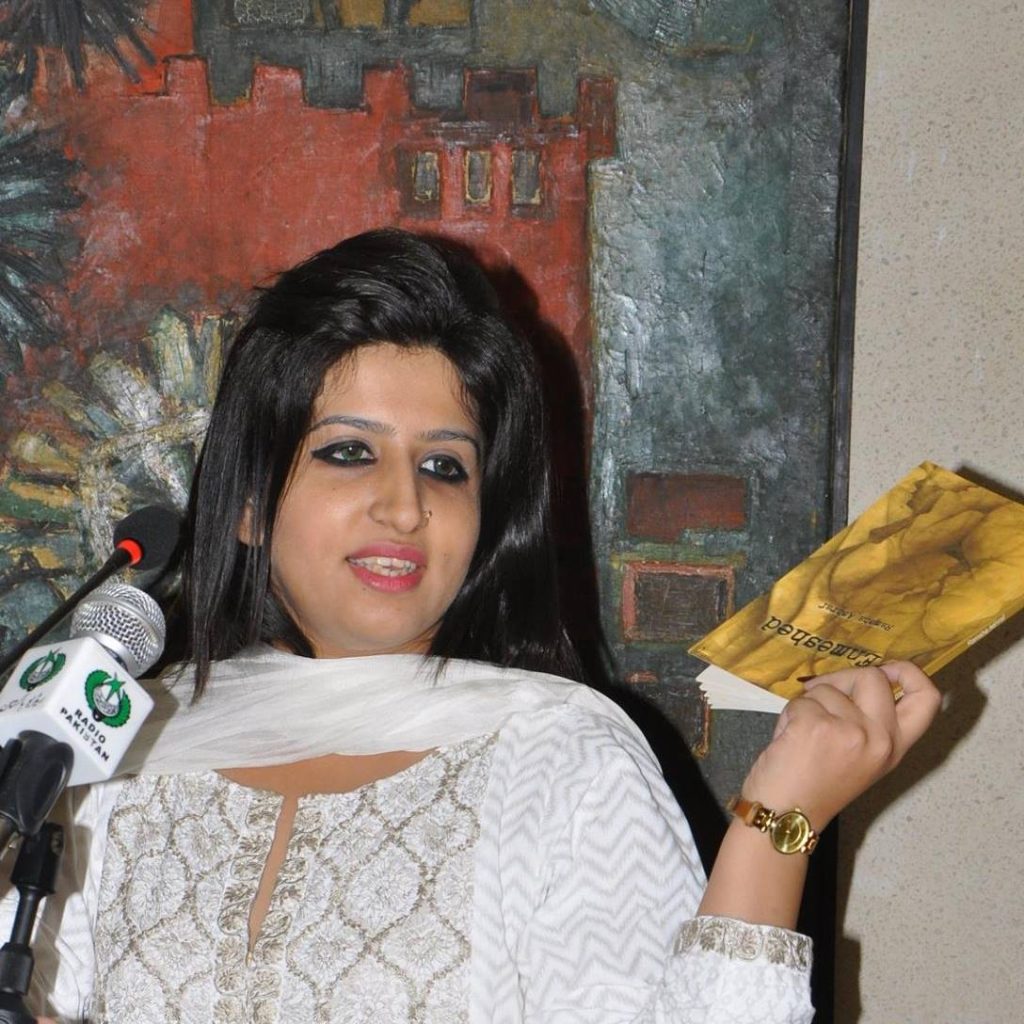
Ramsha Ashraf is a poet and researcher of Pakistani origin based in West Midlands. Her poetry debut Enmeshed was published in 2015, followed by a poetry pamphlet, Love Poems Are Hard to Write, published in 2019. Her doctoral research focuses on technology, politics and policy. She holds an honorary fellowship in Creative Writing from International Writing Program, University of Iowa.