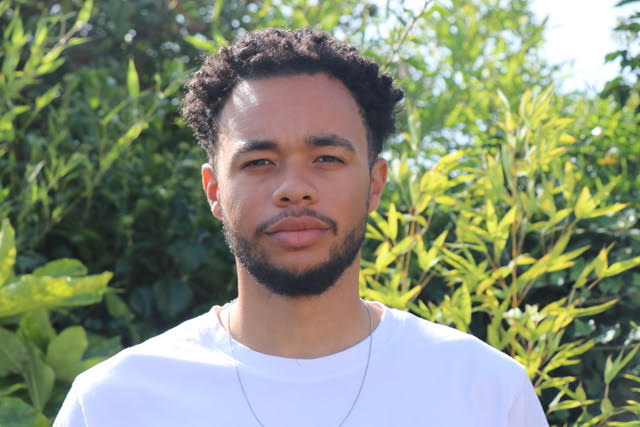
On 10 April 2021 at our Poetry Room with Akila Richards & Guests event, we had the pleasure of hosting historian, community organiser and graduate student Caine Tayo Lewin-Turner as a special guest. Caine gave a nuanced and stirring talk on how decoloniality looks and the challenges ‘heritage’ faces in the current moment. The speech was so well received that we are publishing it here for the wider community and those who missed the event.
On the questions of heritage, national identity, and colonial legacies, I have spent a great deal of time reflecting on what makes a heritage practice truly ‘decolonial’. As can be assumed, this kind of enquiry promptly reveals exactly what may not be considered a decolonial heritage practice along with the norms that inhibit progress towards a Heritage that serves as an aid to contemporary liberation, departing from its current function as an agent of reactionary nostalgia and societal stagnation.
Previously, I have criticised the call for the image of a black individual to replace Edward Colston, atop the now empty plinth in Bristol, as I felt this did not disturb the colonial contours of what Stuart Hall called ‘the Heritage’, especially the deeply colonial ‘Great Man’ notion that dictates much of British Heritage. I assumed that much more than just Colston had been rejected by his toppling and felt that many of the supposedly progressive responses did not reflect that reality. I also took aim at the idea that a plaque could ever capture that which it is so often tasked to. This is all in the context of a national heritage that is harmonious with the most destructive forms of British identity. I see these practices, and those with symmetrical intentions, as harbingers of failure in anti-racist and decolonial heritage movements, and I wish to take a few moments to consider a prominent and reoccurring element of these issues and to reflect on what is being obstructed by it.
It is now, amongst some circles, commonplace and even expected to critique the politics of representation, or diversity politics, and how it has distorted and frustrated various quests for liberation. As is often highlighted, diversity politics manifests, for example, as attention to the diversity of a corporation’s boardroom, rather than their treatment of their lowest paid workers or the impact the company has on marginalised communities. It privileges pigmentation over policies in the realm of politics and has allowed the current Prime Minister to relieve himself of his racist actions by pointing at the brown people in his cabinet. These are the discontents of corporate diversity’s socio-political hegemony. It’s efficacy is argued through truisms like ‘the value of seeing oneself in a certain position’ and ‘the importance of being represented’, which veil its exploitation of privilege and inequality within marginalised communities. Representation’s blindness to structures is especially appealing to preservers of the status quo, regardless of their political alignments. Indeed, the authoritarianism and inhumanity of Priti Patel and the dishonesty and moral bankruptcy of Tony Sewell have produced renewed criticisms of the uncritical celebration of black and brown faces in high places. This critique is not based on an essentialist call for political symmetry, but instead recognition of how racialised identities have been weaponised against us. Diversity is indeed their strength.
Despite this, diversity politics is alive and well in the Heritage discourse. Although various structures of power are loosening their grip on Benin Bronzes and other items of plunder, the built environment, however, remains a stalwart of reactionary conceptions of heritage. In the post-Colston Heritage world, MPs have called for reports on historic building’s links to slavery to be shredded, listed gravestones and busks of black historical actors have been attacked and damaged, all while the very same people who, for so long, failed to deal with the legacy of slavery in Bristol are drying off Colston and whitewashing the actions of June 7th 2020, in preparation for a neutral museum exhibition. How do those of us who wish to change the character of the Heritage respond to these circumstances? It seems to me that one’s response to this question reveals one’s conception and purview of heritage. One could, for example, protest for more statues and busks to highlight the achievements of non-white historical actors, where one may find success if their chosen historical actor is adequately inoffensive to contemporaries, as can be seen with Mary Seacole. One could also petition for contextualisation, most likely in written form, on the firm assumption that this knowledge, will, eventually, at some point, ultimately, one day, lead to some change. The purchase these desires have in heritage discourse, even amongst progressive and radical circles, demonstrates the influence of the aforementioned destructive and misguided articulation of anti-racism, even when it is intersectional. My issue with these responses is not so much that they are insufficiently radical, but that they use an identical framework of heritage as the one offered to us by the forces looking to uphold a colonial heritage. If we are going to disrupt anything, we must continuously seek out alternative conceptions of heritage that align with our values and intentions. Inherent in this objective is the rejection of the assumption that Heritage is, ever was, or can be, a politically neutral cultural form without baggage or power: it is either for or against the colonial.
With this in mind, it becomes incumbent upon us to ask: what is Heritage really for? Is it solely an arena for nostalgia? Somewhere to locate values to replicate and perpetuate? Our task, amongst the chaos, is to etch our decolonial values into our heritage practices. And practice does not only refer to new heritage-based endeavours: the dethroning of the colonial is indeed a ‘practice’ which needs to be decolonised. The heritage I want to conceive of, both as a response to the exclusionary national story and to foster direct action and social change, is more capacious than statutes, museums, and building names. Chiefly, I am agitating for a heritage that does not rely upon the two most comfortable narratives of British Heritage: ‘the national’ and ‘the Great Man’. And one that can comprehend community, and therefore be a factor in the defence of community in light of austerity, gentrification, privatisation, corporate mendacity, and government cruelty. Equally as pressing is the need for sites of trauma. Trauma is not addressed by straining one’s neck to look up at a chosen historical agent. The histories and legacies of slavery, colonial rule, and various identity-based sources of historic and contemporary oppression mandate a physical presence which serves not as a shrine to a hero, but instead as a location of healing, knowledge production and sharing, and collective historicization. What I consider a ‘dissident heritage’. This, in practice and theory, is an outright rejection of the hegemonic conception of heritage, not just its colonial furnishings.
Recent events have shown us that heritage is an arena in which we fight, and indeed many have fought before us, yet there is a pressing need for clarity and honesty on exactly what we are fighting for.
Words copyright Caine Tayo Lewin Turner 2021
Please note, we are planning to host a follow-up panel discussion with Caine and special guests in June 2021- do keep an eye on our events calendar and sign up to our newsletter for more updates and information.
About Caine Tayo Lewin-Turner
Caine Tayo Lewin-Turner is a graduate student at St Edmund Hall, Oxford. He has worked on a variety of anti-racist and decolonial projects with organisations such as Bristol Museums, the University of Bristol, Brighton Museum, BBC, Stuart Hall Foundation, Historic England, and English Heritage. His research explores the interactions between collective memory, racialised identities, trauma, gender, and sexuality. Caine is currently exploring political radicalism in the black Atlantic and the fortunes of political dissidents in the black radical tradition.