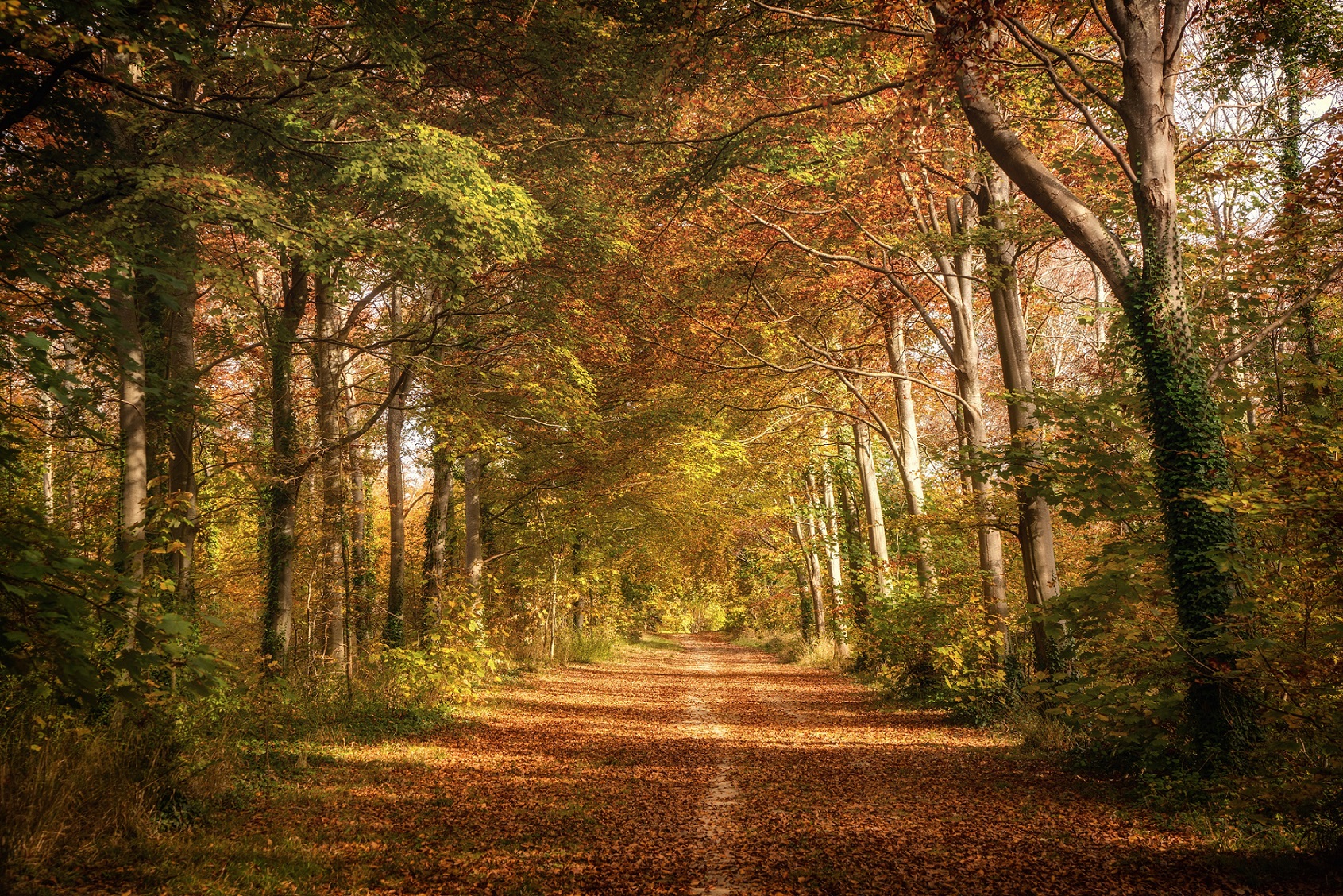
“The South Downs make me feel alive and I cannot wait to spend some autumn days there.”
Those are the poignant words from Georgina Aboud, who is one of eight talented wordsmiths awarded creative writing bursaries to explore the amazing landscape, wildlife and heritage of the South Downs National Park.
Over the coming months, the writers will be using their creative talents to produce prose, poetry and other chronicles inspired by the stunning landscape and their experiences of it.
The £500 bursaries have been awarded as part of Writing our Legacy’s ‘Shifting the Gaze’ – a project working with Black, Asian and ethnically diverse writers from across the South East to share new voices and stories about these ancient rolling hills. Earlier this year, seven other writers were awarded bursaries following the first round of applications.
The second round of bursaries have been awarded to:
- Ümit Öztürk, Brighton & Hove
- Josephine Hall, Brighton & Hove
- Katy Massey, Brighton & Hove
- Georgina Aboud, Brighton & Hove
- Saira Naizi, London
- Tamara Gordon, Lewes
- L. Oluwafemi Hughes Jonas, Brighton & Hove
- Naluwembe Binaisa, London
Georgina, a freelance writer and poet, said: “I was absolutely delighted when I found out I was receiving this bursary. Working on this project is a wonderful opportunity to spend time on the South Downs and research how best to engage the public in this space, making the most of its nature and beauty.
“The writing work I want to undertake on this project relates directly to my heritage and family. Writing Our Legacy is the perfect supportive programme to collaborate with because it seeks to uncover and tell hidden stories and histories.
“I’m utterly inspired by the magnitude of the South Downs landscape; its history, and its nature. It’s a place that is both grounding and expansive. It opens doors in my mind to imagination, potential and possibility. It makes me feel alive, and I cannot wait to spend some autumn days there.”
Kate Massey said: “The South Downs has been an escape, a space for meditation and provided an ever-changing tapestry of flora and fauna for myself and my family every since we relocated to Brighton nearly six years ago. We feel very lucky to have it on our doorstep!”
Saira Naizi, who has visited over 1,000 hidden gems in London and documented her city wanderings on Living London, said: “I love the South Downs and am really passionate about opening up the landscape to others from diverse backgrounds, both through my writing and by organising a trip to the South Downs National Park for young writers from London. This project will allow me to do just that!
“Having lived in a frenetic urban area of South London for most of my life, I’ve always escaped to the South Downs for peace, space, and inspiration. The landscape and the connection I’ve formed with different parts of the downs, from the Chattri to the dew ponds, have inspired me to write many short stories over the years. I’m really interested in the timeless nature of the space and the possibilities it holds for people from all walks of life.”
Tamara Gordon said: “To walk this land and create my own song lines by being offered a voice has legitimised me. It helps heal a deep wound.”
Josephine Hall, said: “The South Downs landscape has been a huge source of inspiration, and escape, over the years I’ve lived in Brighton. Particularly in the last 18 months, I have felt my connection to this particular landscape deepen as I have explored more areas, both alone and with groups such as Black Girls Hike.”
The bursaries will fund the writers to do a three-month research and development project over this autumn and winter. They will also receive guidance from Writing Our Legacy, support from New Writing South, and practical advice from South Downs National Park.
Arts forms supported will include fiction, prose, creative non-fiction, poetry, and journalism.
Amy Zamarripa Solis, CEO of Writing Our Legacy, said: “The Shifting the Gaze bursary has already made a seismic shift in providing writers of colour access to the South Downs National Park to inspire and transform their writing practice. We are excited by the talent and variety of these eight recipients and look forward to supporting their journey as writers and of course reading their new work.”
For more information on the project visit www.writingourlegacy.org.uk
Ends
Notes to Editors
About the bursary recipients
Ümit Öztürk is an editor, broadcaster, poet, playwright, linguist, and a creative writing and media trainer. A curator of a number of exhibitions with a focus on underreported depths of world cultural heritage. Based in Brighton. He is the coordinator of Euro-Mediterranean Resources Network (@euromernet) where he is in charge of community radio shows, film club, poetry club and the cultural heritage club. His interests include philosophy, world literature and music, cinema, and cooking. He is an international patron, tactical advisor and strategic consultant to a number of cultural, environmental and human rights organisations around the world – and “a honorary father figure for many cats around the world.”
Josephine Hall is a writer and artist, who enjoys experimenting and adventuring. Born in West Cornwall to Jamaican and English parents, and having spent a year living off-grid on an isolated peninsula in West Scotland, she feels a connection to coastal landscapes and has been based in Brighton for several years. Josephine has had a few homes, and her sense of what it means to belong is fluid and flowing. Her creative work tends to explore themes such as identity, nature, adventure, healing and the black/mixed-race experience. She endeavours to make work that is honest, accessible and amplifies marginalised voices, particularly those from the global majority. She loves having the South Downs and the beach on her doorstep, and can often be found writing outside with a flask of tea.
Katy Massey worked as a journalist for many years before completing a PhD in Creative Writing at Newcastle University. Her memoir of growing up in Leeds in the 1970s and 1980s, Are we home yet?, was published by Jacaranda in 2020 and was short-listed for the 2021 Jhalak Prize and longlisted for the Portico Prize. Her work has also been shortlisted by Penguin WriteNow, SI Leeds Literary Prize, Route’s A Few Good Books, and CommonWord/Cultureword First Novel competition. In 2019 she contributed to Kit De Waal’s Common People anthology of working class life writing. As an editor and project leader she has developed and published neglected voices, working with over 50 new writers to author their lived experience. This has resulted in two Arts Council-funded memoir anthologies: Tangled Roots: True Life Stories About Mixed Race Britain, with contributions from Bernardine Evaristo and Diana Evans, and Who are we now? A collection of true stories about Brexit, with foreword by Blake Morrison.
Georgina Aboud is of Lebanese and Anglo-Irish heritage. She lives in Brighton, where she works as a freelance writer. Much of her working life has been spent in international development focusing on gender, climate change and food security. Through this work and others, Georgina has been lucky enough to work all over the world including observing elections in Kosovo, Macedonia and Ukraine, collaborating with forest and mountain communities in India and Colombia, working on briefing papers in Bangladesh as well as pulling pints in Peru. Georgina has also worked as a carer, a TV and film extra and a dog sitter. She is currently working on a novel. She is a winner of the Moth Short Story Award and has also won awards with Word Factory, New Writing South and Spotlight Books and Creative Future.
Saira Niazi is a writer, renegade guide and founder of a creative project called Living London. Over the years she has explored, photographed and written about hundreds of hidden gems from colourful artist studios to wild nature reserves. She has worked with communities across the UK on various cultural, artistic and heritage projects. Much of her work centres around space, and opening spaces up to others through exploratory adventures, both real and in the imagination.
Tamara Gordon picked up the camera as her tool for telling stories over 30 years ago whilst completing an MA in Visual Anthropology. Since then she has been a self shooting director for the BBC, Channel 4, The UN, and South African Broadcasting Corp focusing on race, identity and conflict resolution around the world. Her films have won eight international awards. Recently she has turned to writing and hopes to start podcasting as new ways to tell stories that reframe experience.
L. Oluwafemi Hughes Jonas resides in Brighton, East Sussex where she discovered her passion for both writing creatively and walking in the South Downs Way as a healing. Overcoming trauma and ‘gut- growls’ she continually learns to work with this and laugh though lesser grumbles. Being the Goddess of wilderness wonderings, she loves the idea of creating her own “song lines”. She is published in anthologies; Ink on my Lips 2013 and ‘Hidden Sussex’ 2019 In magazines Disability Arts Online 2018 and 2019 and local community Zine. She self -published a booklet in Nigeria ‘ Reclaiming (Self) Identity‘. She enjoys story-telling and singing.
Naluwembe Binaisa is an interdisciplinary creative practitioner who seeks to understand the flows of belonging, identity, and citizenship that intersect race, gender and generations within our multiple lifeworlds. Her work focuses on Africa’s diaspora, coining the phrase diasporic landscape to capture the active labour of hearts, hands and minds, within the toil, conflict and love acts that transform the contours of our one shared planet. Sacred Trees Sacred Landscapes is the working title for a semi-autobiographic creative writing offering from Naluwembe. She plans to speculatively trace her lifepath, as an embodied intersection of Africa’s ways of seeing, knowing and being in the world. Pivotal to Naluwembe’s story is the South Downs’ ancient landscape which has resonated through her life from childhood to today.
About Writing Our Legacy
Writing Our Legacy CIC is an arts and heritage organisation that enables Black, Asian and ethnically diverse people to tell their story through writing and the creative arts. We were established in 2012. We give writers and other creatives a platform and community to feel supported, nurtured and evolve their work through the creative pipeline, from start to publication. We share stories and heritage of diaspora communities and bring them to life through various art forms for audiences to learn and take part in cultural heritage.
We employ MOSAIC’s definition of Black to be ‘Black people’ and ‘mixed-parentage people’ including all those people whose ancestral origins are African, Asian, Caribbean, Chinese, Middle Eastern, North African, Romany, the indigenous peoples of the South Pacific islands, the American continents, Australia and New Zealand. https://writingourlegacy.org.uk/
About New Writing South
New Writing South serves writers from across southeast England. Whether you’re an aspiring or established writer of novels, short stories, poems or plays, New Writing South is here to feed your creativity. newwritingsouth.com
For more information contact:
Jeff Travis, Media and Public Relations Officer
South Downs National Park Authority
Direct Line: 01730 819252, Mobile: 07557 853277, Email: press@southdowns.gov.uk
www.southdowns.gov.uk
Amy Zamarripa Solis, CEO
Writing Our Legacy
amy@writingourlegacy.org.uk
07732 697 290