
Uyghurs are a persecuted people. It is estimated approximately 1.8 million are currently being detained in camps across ‘so-called’ Xinjiang, or unceded East Turkestan. It is suggested a staggering five million have been detained over the last three years. Today there are also 500,000 minors in specially designated Chinese-run boarding schools. Lesser known is the programme of forced repatriation of Uyghurs living outside of China. This piece of fact-fiction by Sul Nowroz looks at the known arrests of three Uyghurs, two in Saudi Arabia and one in Morocco and imagines what the detention experience might be like based on the testimony of others who have suffered captivity and confinement. This is a Writing Our Legacy Creative Commission.
Note to reader: This essay contains details of incarceration and prison-related violence.
“And then they were gone.”
Silence, both of us waiting for the other to speak. I wanted to ask more, more about Ehmet and Adil and Yusup, and about Yusup’s wife and their daughter. I felt clumsy, awkward, not knowing how to ask that burning question: was violence used in their disappearance? My mind froze, my mouth dried up.
The voice on the Zoom call belongs to 49-year-old Mehmut, an accomplished linguist and poet from East Turkestan, and now a Uyghur activist exiled from his homeland. He is also the keeper of other people’s stories, a teller of tales, who catalogues the living histories of those who have been made invisible.
A father of two and a proficient English speaker, Mehmut has a cold. Nasally and with congested sinuses, he is forced to clear his throat periodically. He looks like a tired man, eyes drained and a puffy face. “It’s something I picked up on my trip, but I am home now,” he says with a sense of relief and irony.
His trip took him to Tajikistan, Uzbekistan and then across to Bishkek in Kyrgyzstan. The ‘stan’ suffix here is poignant for Mehmut; it is rooted in Persian, and while there is no direct translation, it can be said to mean ‘where one stands’ or ‘the place of’. But Mehmut is not ‘of’ any of these places. He is from the land that borders them; the land of East Turkestan, an area occupied by the Chinese and re-named Xinjiang.
Since the occupation, thousands of Uyghurs have been displaced from their homeland, many re-settling in Scandinavia and Canada, a few in Türkiye. Adil, Yusup and Ehmet set up home in Istanbul, and they travelled regularly to visit friends and family. Adil and Yusup’s last trips were to Saudi Arabia, where they were arrested in November 2020. Ehmet’s final trip was to Morocco in July 2021, where he was detained. By the autumn of 2021, all three faced forced repatriation to China and almost certain imprisonment. None had committed any crimes. They were simply part of the Uyghur diaspora. Yusup’s wife and daughter travelled to Saudi Arabia to help with his release, but in a cruel twist were themselves arrested in March 2022. Yusup’s daughter was 13-years-old.
In April 2022, without explanation, all communication with the five stopped and none have been seen since. Law enforcement agencies from Morocco, Saudi Arabia and China deny any knowledge of their whereabouts. Four adults and one child simply disappeared from government custody, as though they never existed. But they did. Mehmut showed me photographs, told me their stories and spoke of the trauma experienced by their extended families. “These people are real, like you and me,” he said, “and then they were gone.”
Have you ever been spirited away, where your mind temporarily abandons your body? Have you ever mentally wandered across hauntingly familiar landscapes or carefully travelled to intimate memories, so as not to warp or fracture them or, even worse, wear them out? Have you ever left this atomic world and found yourself in a celestial place where your truth resides, not as facts, but as felt sensations?
Mehmut has his celestial place. It’s not a church, or a mosque, or a synagogue; it’s a dusty spot just large enough for his size 10 feet. It’s a spot in the middle of expansive dusty plains, their distant edges ringed by the contours and falling shadows of towering mountains. Above is a big sky, comfortably occupying three-quarters of the horizon. By day, it provides the richest blues, by night, the darkest blacks. For Mehmut, this place is cinematic, eerily empty and divine, all at once.
Mehmut’s spot is in Qolma, the Tajik-Chinese border town that acts as the main artery into East Turkestan, occupied by the Chinese since 1949. For Mehmut, Qolma is where he loses himself to himself, to all the things that make up Mehmut: loving parents, an active childhood, trusty friends; his sudden arrest, painful incarceration and violent torture. As he stares out, he can see past the border fence, the imposing metal gates and the low-rise white box-shaped administrative building and transport himself home.
Home is what connects Mehmut to Adil, Yusup and Ehmet and the thousands of other forcibly displaced Uyghurs. They are the diaspora: a scattered people, from a nation that does not exist on maps or postcards, nor take up shelf space in tacky souvenir shops. The Uyghur-in-exile nation-state lives in the heart, where border fences are weak, and in the soul, where the emotional residue of home is strong.
From his spot and with feet firmly planted on the ground, Mehmut journeys to his place of truth and welcome: a place of comfortable faces and close friendships, of sudden smiles and connection with parents and grandparents and great-grandparents and spirits of ancestors. In these moments, Mehmut reassembles his identity, tenderly seizing memories and sensations, putting them together according to a fading blueprint. It’s painful and involuntary; he is mainlining his personal history like a seasoned addict.
Mehmut remembers the smell of flatbreads being prepared and baked by street vendors in open ovens, of kawap, heavily spiced lamb and chicken chunks, skewered and grilled over an open flame. He reconstructs the taste of home-cooked laghman, noodles covered in a tomatoey, oniony, peppery sauce, and manta, large dumplings swimming in a rich soup of stock and filled with generous portions of ground lamb and onion. Biting into one is an art form.
As a refugee, Mehmut is used to dumpster-diving for his memories of home. Exiled from East Turkestan in 2015, he has no capacity to create new ones.
Listening to Mehmut’s meditations on home and memory, one can sense a transcendent quality. It is as if the forced separation from his homeland is re-enacting itself, playing out this time as a rupture between body and consciousness. Initially, I felt this was verging on spiritual, but upon reflection, I think it’s the spirit breaking apart. It’s not so much freeing and elevating, as fracturing and estranging. It’s sad, not heavenly.
And Mehmut is not alone. Hundreds of thousands of Uyghurs have dispersed around the world, each scarred by their own mini-rupture. But for some, the relationship with home, self and memory is being violently manipulated even further.
Since 2017 China has instigated a programme of forced repatriation of Uyghur dissidents. A handful of countries that once offered safe passage and secure abode are now tyrannising Uyghurs, and repatriation efforts have ramped up since the beginning of 2022. According to Bradley Jardine, an analyst at the Woodrow Wilson Centre who monitors Uyghur harassment and welfare, China has implemented a highly efficient “global dragnet”. Bradley talks about China’s chillingly repressive reach outside its borders: “China has engaged in transnational repression in 44 countries” and, as of January 2022, there were “1,574 publicly reported cases of detentions and refoulements of Uyghurs to China, where they face imprisonment and torture in police custody.”
Three individuals caught in China’s vicious dragnet are Adil, Yusup and Ehmet.
Dhahban is in Saudi Arabia, 34 miles north of Jeddah and 50 minutes by car on Route 5. The highway out of Jeddah initially clings to the Red Sea coastline, veering inland at about the halfway point. It is an empty desert, except for clusters of thorny wildflowers – long, skinny barbed stems with menacingly prickly heads that look combat-ready. The town is a ghosted landscape: a crumbling waterpark, a fading equestrian centre and a prison that intimidates. There is an uneasiness to this place, a place where bodies transit, but souls remain ensnared.
Razor wire, high walls, watch towers. Erected in 2015 and with a capacity for 7500 inmates, Dhahban Central Prison cost $75 million to build. The facility holds political prisoners, serious offenders and a few whose destiny has been cruelly marked by injustice and misery, the ‘wrong-place, wrong-time’ people. This netherworld doesn’t discriminate and includes males and females, adults and – disturbingly – children. Normal rules don’t apply here: inmates are repeatedly electrocuted, flogged and beaten. Some are believed to have been sexually assaulted. The devil would struggle to make sense of this place.
People in Dhahban also disappear, although, according to the spokesperson for ALQST (Al- Qist means justice in Arabic), the exact number is unknown.
“We’re an NGO, and we monitor human rights abuses in Saudi Arabia. Enforced disappearance is a preferred tool for this regime. The disappeared include academics and activists; preachers, politicians, poets and even princesses; researchers, writers, journalists, and some foreigners. Lebanese, Palestinians, Qateris, Ethiopians. But no Europeans, Europeans don’t seem to disappear.”
“Have Uyghurs disappeared?” I ask.
“Yes. Uyghurs are marked and tracked wherever they go in Saudi Arabia. And yet, they still disappear.”
I mention the names Adil and Yusup. “Did they disappear in Dhahban?”
He responds: “Yes.”
Three thousand miles from Dhahban is Tifelt, a once important town steeped in history. Located in the north-western corner of Morocco and 40 miles east of Rabat, it is a landlocked piece of semi-desert struggling to remain relevant. Even Trip.com’s top ten recommendations for Tifelt suggest travelling to ‘nearby towns.’ It boasts a medium-sized hospital, a public bath, and, bizarrely, over a dozen pharmacies. This scattering of buildings intermixed with mosques and schools act out a conspiracy of normalcy, but squatting on the western fringe of the town is one of Morocco’s more controversial prisons. On approaching the prison, there is a large orderly and functional sign: Complexe Penitentiare Tifelt. But inside, Tifelt is anything but orderly or functional. There is serious and long-term overcrowding, months of inhumane isolation for ‘problematic’ prisoners and regular outbursts of violence including the 2020 killing of a prison guard.
Adil
3 February 2020 was a Monday. It was the day the Trump administration confirmed it was imposing travel restrictions to contain the spread of the coronavirus outbreak. At the time, the virus had killed approximately 400 people, infected close to 20,000 and was to wreak havoc in the coming months. It was also the day Adil boarded his four-hour flight from his adopted home in Istanbul to Jeddah, Saudi Arabia. This was a special trip for Adil: he was travelling to the holy city of Mecca to perform the Umrah pilgrimage. As he jetted towards his spiritual home, and the birthplace of his religion, he felt a sense of divine protection. But his intuition was faulty.
Umrah. Noun: the pilgrimage made by Muslims to Mecca, which may be performed at any time of the year; opportunity for Muslims to refresh faith, seek forgiveness and pray for their needs; a spiritual quick-fix, can be completed in under two hours.
On completing his pilgrimage, Adil made an ill-fated decision: to extend his stay by a couple of weeks. Jeddah is an enticing city, offering a glittering corniche to rival Cannes. There were sights to see and old friends to visit. But events overtook him, and on 2 March the Saudi Ministry of Health confirmed the country’s first coronavirus case. The suspension of all international flights followed on 21 March. Adil was grounded. Unable to leave Saudi Arabia, he quickly became an unwelcome tourist in a country that was suspicious of out-of-towners even before the pandemic.
Adil frequently spoke to his 21-year-old daughter, who was studying in southern Europe. The calls were his link to normality, but things changed. Increasingly, there was a hint of an echo on the line. Battery capacity started to rapidly decrease, requiring Adil to charge his phone multiple times a day. His daughter complained of getting a busy signal when Adil knew his phone wasn’t in use. The back panel of his phone, where the battery is located, was continually warm, even when not in use. He repeatedly received text messages about exceeding his data limits despite limiting his data use. And moving between functions on his phone took unusually long, sometimes up to 15 seconds.
Black Code. Noun: intrusive software used for aggressive surveillance purposes and the militarization of cyberspace; software that facilitates the illegal collusion between government agencies and security services; software that erodes civil liberties and personal privacy.
Adil suspected he was being tracked, something Uyghurs are accustomed to. He left his hotel and started staying with friends and friends of friends. He zig-zagged up and down Saudi Arabia’s western coast and on occasion, doubled back on himself. He was nomadic. But as a 50-something-year-old father, religious scholar and dignitary, Adil wasn’t suited to the cat-and-mouse game that was unfolding. He became increasingly fearful and anxious. There were rumours he was on a Chinese list of Uyghurs to be ‘repatriated’.
Through a word-of-mouth network, Adil was passed from safe house to safe house, unsure of how to get back to Türkiye. To complicate matters, he was travelling on a Chinese passport.
In early November 2020, Adil found himself in Al Masfalah, a quiet, pocket-sized village in the province of Mecca. He had been introduced to a fellow Uyghur named Yusup, and although they didn’t know each other personally, Yusup extended the hand of friendship. Yusup was younger, in his mid-40s, and like Adil, he had escaped occupied East Turkestan. Importantly, he ran business interests in both Saudi Arabia and southern Europe. Yusup made his way to Adil’s temporary hold-up, and the two discussed how Yusup might be able to help Adil get back to Türkiye. Unbeknown to either, Yusup was being followed by Saudi police and Chinese consular officials.
20 November 2020 was a Friday, the first day of the weekend in Saudi Arabia and the last day of freedom for Adil and Yusup. There is little detail on what happened, but it happened fast. The arrival of vehicles – some with police decals, others without. A house surrounded. Noise. Banging on doors. Shouting. Shoving. Commotion. There was a struggle. Arms waived; fists flew. It all lent Al Masfalah temporary chaos and brutality.
“The next time there was a confirmed sighting of Adil and Yusup was at the local police station,” says Mehmut. “We know from there, they were transferred to Dhahban Prison. Neither was provided any legal support or formally charged.” His next comment is more sinister: “Unusually, Chinese officials were present during the arrest and questioning.”
Refoulements are as peculiar as they are perverse. Their sole aim is to put a person in harm’s way by forcibly returning them to a country where they are likely to be subjected to persecution. Since the motive is morally bankrupt, refoulements are often carried out discreetly, away from the public’s gaze.
During 2021, fragments of Adil and Yusup’s existence were smuggled out of Dhahban. Piecing them together is part detective work, part assumption. We understand they were frequently separated and kept in solitary confinement for extended periods, where the howls of their distress would turn inwards. To counter this unsettling state, they probably created repetitive routines, involving internal dialogues, something learnt from other prisoners. For Adil, these may have been religious in nature, as he is a devout Muslim. Yusup loves food, and one can imagine him mentally preparing his favourite dish, polu, at home, amongst family and friends.
I am home, the kitchen alive,
Joy of family, bubbling next door.
It is time – feed the mouth, fill the soul.
Two spoons oil, tablespoons,
five cloves garlic, from here.
I am home – the kitchen alive.
Three pieces ginger, peeled,
two kilos lamb ribs, local, cubed.
It is time to feed the mouth, fill the soul.
Two teaspoons salt, levelled,
two fist-sized onions, borrowed, finely chopped.
I am home – the kitchen alive.
One kilo carrots, sliced,
two cups rice, cold rinsed, local water.
It is time – feed the mouth, fill the soul.
But I am not home – kitchen dark.
Empty mouth,
Shrunken soul.
Loved ones agonised over their separation from Adil and Yusup, but the two had little sense of time. Surrounded by damaged prisoners and deranged guards, they became the latest casualties in an intergenerational, pan-geographic purge; a persecuted people whose existence was shrouded in sadness, and where oppression was all too pervasive.
Ehmet
Istanbul Airport is big and getting bigger. Built in four phases and costing $12 billion, it won’t be complete until 2025. The airport covers almost 19,000 acres, and it will be the world’s biggest and busiest airport when finished. Getting lost will be easy.
On 19 July 2021, Ehmet was lining up ready to board his five-hour flight to Casablanca. He would have a short layover and then fly another three and a half hours to Amsterdam to begin a new life. His wife and two sons would remain in Türkiye until he secured residency and would then follow. Buckling into his seat, Ehmet prepared himself for the temporary separation. This was not going to be an easy trip.
Casablanca Airport is south of the city. Its approach is often over unlit terrain, and the darkness can feel unwelcoming. Landing just after midnight, Ehmet is tired. As the aircraft taxies to its parking bay, Ehmet runs through his checklist: clear passport control, claim bags, clear customs, walk the minutes between terminals, find a row of empty seats and try to get some sleep before his mid-morning connection. As the plane inches into the gate, Ehmet closes his eyes and pictures his wife, Meryem, and their two sons at home. He remembers first arriving in Istanbul in 2012, full of hope and excitement for his adopted home. He recalls the hostile interviews with the Turkish immigration police and his subsequent periods of detention. It all feels dreamlike, hallucinatory. Then his surroundings and memories collide. Noises are muffled, then grow loud, shuffling off the plane; faceless police officers emerge, no longer faceless but gargoyle-like and breathing fire; they are few, then many. Outside is dark, inside darker, stygian. Hurry through hallways: blood on floors, flesh on walls, bite marks decorate door frames. Savagery is everywhere.
Nightmare. Noun: a frightening dream that usually awakens the sleeper; an experience, situation, object or place, having the monstrous character of a nightmare or producing a feeling of terror.
Ehmet uncurls himself. He is in a shoebox-shaped cell in Tifelt prison. The cell is sealed shut by a metal door, which is veined with scratches of panic and terror. Artificial light hangs from the ceiling, lifeless. Ehmet can see his shadow has escaped his body, but his body will not escape this cell.
Ehmet has a fluency with prisons, having been detained a total of five times: once in China, three times in Türkiye and now once in Morocco. He has no criminal record and has committed no crime, but he understands a prison’s shameless concoction of brutalism and startling geography and its ability to disorientate and dishearten. Tifelt is no different.
Ehmet was arrested on a fabricated Interpol arrest warrant that violated its statutes when issued by the Chinese government. His arrest was publicised by various activists, including Mehmut.
The arrest warrant, or Red Notice, was cancelled in August 2021, but Ehmet remained in custody. Unusually for Morocco, Ehmet’s extradition hearing was made a matter of public record. As a result, we know that on 15 December 2021, a Rabat court issued a favourable opinion on the Chinese government’s extradition request, and Ehmet was informed he would be returning to China. Ehmet’s periodic phone calls to Meryem, who remained in Türkiye, stopped in March 2022. He is believed to still be in Tifelt, making the unhomely home, but no one is sure.
Reyhan
9 April 2022 was a Saturday. A quiet day for most. Little seemed to be happening. A bored Elon Musk took to Twitter: “Most of these top accounts tweet rarely and post very little content. Is Twitter dying?” Musk was unaware that earlier that day Twitter’s role of DIY journalism was far from dying. Two tweets had been posted by Mehmut. The first was alarming:
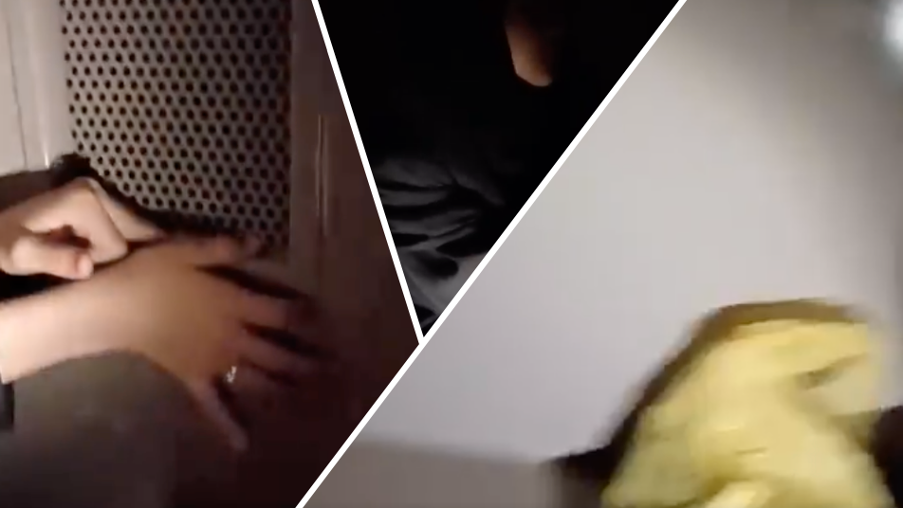
“Reyhan is the wife of Uyghur detainee Yusup, who [has been in] detention since November 2020 with Adil. She is the only one visiting them in the jail, telling us about them, she [Reyhan] and 13 years old daughter got detained a week ago.”
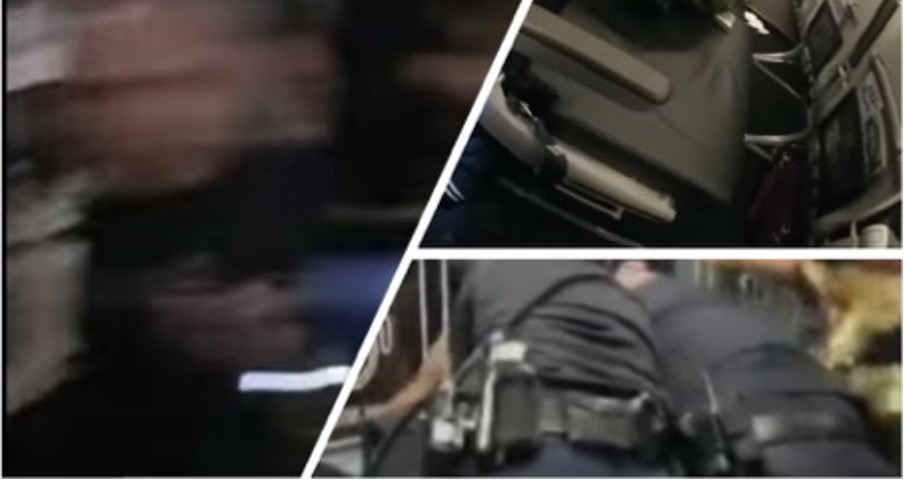
The second tweet was distressing. It was a 33-second video shot inside a windowless vehicle. The lighting is poor, and we can only see patches of the interior. There are white walls, beige bench seats and a metal grill of some kind. There is a glimpse of a hand, slight and feminine, a golden band on one finger. Then, for less than a second, we see a young face, a scared adolescent child, dressed in black, with a black headscarf. The video is of Reyhan and her 13-year-old daughter in a prison van.
Since Yusup’s arrest, Reyhan suspected she was under surveillance, her movements and conversations captured in a web of black code that scrutinised every aspect of her life. She had residency in Saudi Arabia, but it came with few legal rights and little protection. Reyhan reported to friends her growing anxiety but bravely continued to raise Yusup’s case with governments in Europe and the US and with a handful of NGOs in the region. She also remained in contact with Yusup; her last call with him was on 20 March 2022.
Reyhan was right to be anxious. On Thursday 31 March 2022, friends informed several NGOs that she had been arrested and taken into detention. Shockingly, the authorities also detained Reyhan’s 13-year-old daughter. Sometime between 31 March and 9 April, Reyhan and her daughter appeared in a Riyad court, when the video footage is believed to have been recorded. Neither Adil nor Yusup, Reyhan and their daughter have been heard of or seen since 31 March 2022.
Writing about the five that have disappeared has changed me — I am estranged from my former self. Now when I dream, I hold my breath as I submerge into life’s suffocating in-between places, where there is little light and even less air. There, I meet Ehmet in his forgotten cell. He is whispering to the walls. He has named them after his sons and wife, but the walls remain silent. I visit Adil. We pray to a god that isn’t listening. With Yusup, there is silence and only our eyes speak. He is a man mercilessly punished twice: once for being a Uyghur, once for being a father. I am ashamed I cannot help him. I linger outside Reyhan’s cell door, which itself lingers somewhere between Saudi Arabia and China. I am unable to enter, haunted by the thirty-three-second video, which runs in a continual loop in my mind.
If Reyhan were ever to speak in my dream, I wonder what she would say about her tinder-box existence. Hers would be the last words.
“_ _ _ _ _ _ _ _ _ _ _ _ _ _.”
Mehmut, Ehmet, Adil, Yusup, Meryem and Reyhan are pseudonyms. Sul Nowroz is an essayist bringing diverse storytelling traditions to established literary spaces. His work is a gentle tilt towards non-western writing conventions and embraces the plurality of cultures in a world full of stories.
Sul has lived in Afghanistan, France, the US, Hong Kong and currently resides in London.