
Competitions, journals and magazines are a fantastic way to begin your journey to becoming a published writer. Even if you aim to publish a full-length novel or memoir in the future, sending shorter pieces out to editors who are actively looking to read your work is a tremendous way to start building a portfolio of published pieces. This is the beginning of your writer’s brand – your style, your themes and your voice will emerge, and you will have a body of work to demonstrate these.
For an agent, it’s a great way to assess your work and to see if they are the correct fit to represent it to commercial publishing houses. I know of at least one international prize-shortlisted novelist who was approached by a publisher on the strength of a short piece they got published in Mslexia. They are now well-established and working on their third novel.
“Literary magazines. They’re strange beasts: beautiful, varied and often painfully short-lived. For poets and writers, however, they’re invaluable. Not only do they allow you to get a feel for the writing of your contemporaries, but they also represent one of the most accessible routes to publication” says Neon Magazine. The magazine itself is currently on hiatus but its website carries a long list of journals you can submit to and competitions you can enter.
Form and Genre
Most literary publications distinguish themselves in the marketplace for readers by publishing particular forms and genres. You can think of ‘form’ as how writing is presented and structured, for example:
- Poetry (using rhythmic and aesthetic qualities of language),
- Prose (including novels, novellas, and short stories, flash fiction),
- Drama (scripted works for theatrical performance)
- Non-fiction (factual writings such as memoirs, personal reflections, essays, biographies, and diaries)
Whereas ‘genre’ tends to be divided by subject matter eg science-fiction, romance, crime. But also length. As you can see, ‘genre’ as a way of dividing literature into groups is a very unstable category. For example, ‘Newly created forms, such as Vikram Seth’s The Golden Gate (a novel written in rhyming verse form) and John Fuller’s Flying to Nowhere (a novel written in highly poetic prose), and numerous prose works of intermediate or very specific length (such as the novella and the short short) are a clear indication of the difficulty of too close a reliance on genre as a category.’ (Britannica)
This is all to say, do not rule out your work for submission because it doesn’t fit neatly into the magazine’s stated preferences! Read the magazine and judge its editors’ taste. Some are more inclusive than others. East of the Web, a very popular short story website, publishes a wide range of different styles and genres. However, you may want to target a nature or ecology-themed publication with your prose poem about the South Downs, even its submission guidelines says it only publishes short stories.
Ask yourself:
- Judgment: Do I enjoy what this magazine/journal publishes and will my work fit in?
- Adaptation: I really like the publication but they don’t publish my FORM/GENRE (eg flash fiction) but could I expand this piece of work into a short story?
- Rules: Read the submission details carefully and FOLLOW THEM
Submissions Versus Pitching
Publications to which you can submit may also accept pitches eg Mslexia.
- Submissions – are when you send your completed work, this generally pays less
- Pitches – when you send an idea for a piece of work to an editor who commissions it, this generally pays more.
There are lots of people offering advice about pitching online, and I am not going to repeat that all here, but in brief, to write your pitch you should:
- Write your idea down in one or two sentences. Eg ‘I would like to pitch a story about…
- Say why you are the person to write this: Eg your professional qualifications/writing experience. ‘I am a fully-qualified vet/experienced carer/have written extensively on…
- Suggest a length and a timeframe eg, 800 words by next Friday.
- Include an intriguing ‘hook’ if you can – eg ‘the effect of AI has been much in the news recently. As a poetry-writing computer expert, I am uniquely placed to say that poetry won’t survive the AI revolution…’
Writing Competitions
These are an effective way to get published: very often, they publish an anthology of winning and shortlisted work, either in print or online. If they publish your work online, you are completely free to include it in your publications list on your writing CV along with your other print publications. More and more publications are online now, and they are well-regarded.
Top tips for competitions:
- Research the judges – what is their taste? Is there an interview where they say what they hope to see?
- Do the same thing with the prize in general – read past winners and shortlisted writers, buy the anthology, look at their social media. Who is their target audience?
- Customize your entry – particularly if there is a theme. You can interpret themes broadly however. Or:
- Write something specific for the prize. This is a way of increasing your output at the same time as increasing your chances of shortlisting. This helps keep your work up to date too – prize-giving bodies are very aware of becoming irrelevant (and remember, done is better than perfect!)
- Plan closing dates in advance – a spreadsheet is helpful.
- Enter as far in advance as possible – every prize gets a rush just before the deadline. It’s SO much easier to rule these out, than rule them in (particularly as sifters may have their favourites by this stage).
- Pay attention to eligibility rules! Also, FORMAT correctly, and take care when naming files etc. It is a pity to fall at the first hurdle because, for instance, you have forgotten to anonymise your story.
Following these guidelines won’t make you a better writer, but it will make you more likely to have your work published. Good Luck!
About Katy Massey
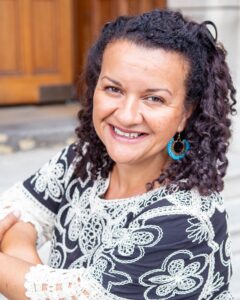 Katy Massey writes fiction and scripts, as well as non-fiction and worked as a journalist for many years before completing her PhD on memoir and autobiography at Newcastle University. Katy’s memoir Are We Home Yet? about her relationship with her mother was published in 2020 by Jacaranda Books. It was shortlisted for the Jhalak Prize and the Portico Prize. In addition, her fiction and nonfiction has been widely anthologised, including Common People edited by Kit de Waal from Unbound, The Place for Me, published by Scholastic, and upcoming speculative collection Glimpse, from Peepal Tree Press.
Her debut crime novel, All Us Sinners, features Maureen, a hard-drinking but tender-hearted brothel-keeper in 1970s Leeds. She becomes unexpectedly drawn into the murder of a friend’s son, events which take place against the disturbing backdrop of the Yorkshire Ripper’s murder spree.
Alongside her own work, she has guided and published numerous emerging writers and initiated her own Arts Council-funded literature projects. She has published two anthologies of memoir: Tangled Roots: True Life Stories About Mixed Race Britain, featuring 30-plus contributions, and Who are we now? a collection of first-person experiences of the 2016 Brexit referendum.
She lives in East Sussex with her family.
***
Sharing your news Are you a member with a recent creative achievement that you want the world to see? Writing Our Legacy has thousands of followers across multiple platforms, and we want to help get your work in front of them. Whether it’s a published piece of work, upcoming performance or a residency, we would love to share your news with the world. Just fill in this WOL members news submission form any time.