
Titilayo Farukuoye is a Glasgow-based Austrian-Nigerian writer, educator and co-director of the Scottish BPOC Writers Network. Farukuoye’s poetry featured at the Fringe of Colour festival and 2020 Mixtape: Writers of Colour Audio Anthology, a collection of work by writers of colour in Scotland. They are a winner of the 2022 Edwin Morgan Poetry Award. Our Creatives’ Network member Reema Kausar Majid reviews their debut pamphlet, In Wolf’s Skin, which was published by Stewed Rhubarb Press in 2024.
In Wolf’s Skin is a powerful collection that ranges freely across languages, continents and traditions, calling out in recognition of and solidarity with women of colour and all those whose identities can’t be contained within neat boxes on drop-down lists. The reader is invited to examine the intersection of race, class, gender and power in these poems, suffused with hope, strength and humour.
Farukuoye interrogates how brown and black bodies are seen by ourselves and others, and all the assumptions and expectations loaded within that gaze, within the “white – soft smiled crowd of white men and women/washes waves of empathy, of pity, of sadness over me.”
Farukuoye peels back layers from conversations and encounters in an unflinching examination. There is a sense of recognition, of shared experiences and emotions being articulated on the page, from the drunk man who sees them as out of place, as too much, but won’t remember the conversation the next day, to the one who asks, “What would you aspire to be [if not this] – working for race equality?/(if you weren’t Black – he means)/usually he is fun, up for an easy laugh, a quick favour/or rant./Now I am perplexed, STILL THIS, I mutter.”
Navigating complex heritage and identity against the backdrop of colonial legacies, Farukuoye writes movingly about the joy and challenge of learning languages, of claiming them as one’s own, of the power and connection forged by weaving between languages and cultures.
In choosing to speak French only to African Francophone people, “because they understand language is a tool/A tool of power/Like having two hands is power or like smiling and being friendly/is power. Like money/is power”, there is recognition of finding common ground. At the same, it is also a means to create a private space beyond words rooted in love and joy, where each understands the other.
This is juxtaposed with another poem about an encounter with an older, white, prestigious academic who can’t conceal his excitement at recognising a name from his geographical area and language of expertise. “He wants to talk to me, badly, an eternity longing for lost connection/Finding home in me/not me but who he thinks I am/Finding Yorubaland in Europe.” And then his disappointment at the lack of Yoruba, the sense of having to explain and apologise for oneself, for the absence of a language bound with the name, contained in his “So, where are you from?”
This anthology offers a space for shared experience; often I caught my breath in recognition at the emotions and memories contained within, at words that traced over past heartache and enduring love, brushing over old scars, sharing laughter, cherishing our bodies, radiating power in creating life.
Farukuoye reaches out through their poems and extends a hand in solidarity and strength. In Ancestral (Heart)Beat, they pay tribute to the Black womxn who forged the way in this country. “Generational, ancestral beat. A mother’s breath/and bosom. Auntie’s spirit and lust”, propelling us forward towards “Profound love/agents of our own desires/we are powerful/I don’t need you to be nice/No need for you to tolerate me/I am and I will be powerful.” There is a sense that these poems are an addition to the legacy of activism and literature that looks to the future with hope.
Titilayo is a name of Yoruba origin, meaning “joy that lasts forever” or “eternal joy”. The abbreviation is Titi. It struck me that Titli, a word very close to Titi, means butterfly in Urdu and the poems in the anthology bear the same lightness of touch. In refusing to be othered, in freely claiming identities, spaces, languages and the power they contain, these poems reach out in solidarity and joy towards a shared world built on justice and equality.
In Wolf’s Skin is stocked in the Writing Our Legacy shop
About the writer
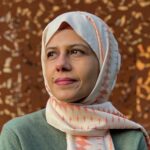 Reema Kausar Majid is a writer who grew up in Pakistan before moving to London. Her work centres on people of colour, exploring the interplay of colonialism, migration, faith and language in shaping identity. Her writings on this have been published in Amaliah under a pseudonym. In 2023, she was a Highly Commended winner of the Faber FAB Prize. She won the 2024 Spread the Word and LBA Literary Agency feedback opportunity and was selected for Writing Our Legacy’s Covert Talent Development Programme 2024-25. Reema has an MA in Creative Writing from Bath Spa University and an MSc in Development Studies from LSE. She is an alumna of the RCW Literary Agency summer workshop 2023 and is a member of Megaphone and Writing Our Legacy.
Instagram @reemakausar01