Writer and poet Omikemi reflects on the impact of Hurricane Melissa as a person of Caribbean heritage and the feeling of further erasure in British society.
On Tuesday, 28 October, 2025, Hurricane Melissa, a Category 5 storm with winds of 185 mph, made landfall in Jamaica before tearing through Cuba, Haiti, the Bahamas, and heading towards Bermuda. At least 96 people have been confirmed dead, with hundreds of thousands evacuated and displaced. I’ve had a range of emotions since Melissa landed. This week, there was rageful grief about the absence of acknowledgement of Melissa and how it may have touched me as someone of Caribbean heritage. When I spoke to others, they too noticed a quietness in the wider public about what was happening to us.
The silence, this all too familiar stepping over, is an act of erasure—a weapon of colonialism. This is how it works: it erases (our) stories, peoples, experiences. Regardless of the workshops, books, podcasts or what we choose—or choose not—to consume, this violence is deeply embedded in the psyche and blood of many of us.
Surreally, this moment brings to mind Samuel L. Jackson as Mister Señor Love Daddy in Spike Lee’s Do The Right Thing, announcing, ‘The weather today is…hot!’ In this instance, the weather today is…muted. This dampening effect of silence does the work of anti-Blackness, permeating what Christina Sharpe so aptly names in In the Wake: On Blackness and Being—the weather system, a pervasive climate of anti-Blackness. Over and over, the message pulsates: some of our lives are not worth grieving.
I experienced a general silence following Melissa’s devastating visitation—the lack of headlines, public conversation, calls for international aid and relief—and it’s once again apparent that some lives are considered more grievable than others. Over the days since Melissa landed, I noticed the ways this messaging was affecting how I carry myself, how it was informing my somatic shape —the stories, environment, political and social forces that affect and shape the way I inhabit my body. I began to feel less desire to care for my own life in subtle ways—resisting acts of care and moving towards small neglects that, if left unchecked, can accumulate into a sense of a life not worth tending.
It has been hard to look—and keep looking; listen—and keep listening—to those who speak with flies at their lips, some of them friends, with the right words in the right order, attending the right protests and marches, collecting their social credit scores. I’m reminded that giving attention is easy; caring is much harder. Care requires recognition and relationality. Care requires you to see me, but even more importantly, it requires me to see me. And I am returned to this: some kinds of light have no kindness in them, but all light eventually arrives at clarity.
This is not personal to me; this experience is engendered in the larger anti-Black atmospheric pressure. The stepping over and silence are part of the ongoing violence of colonialism and slavery. These forces generate the specific type of precarity and grief that is part of my Black British/Black Atlantic experience.
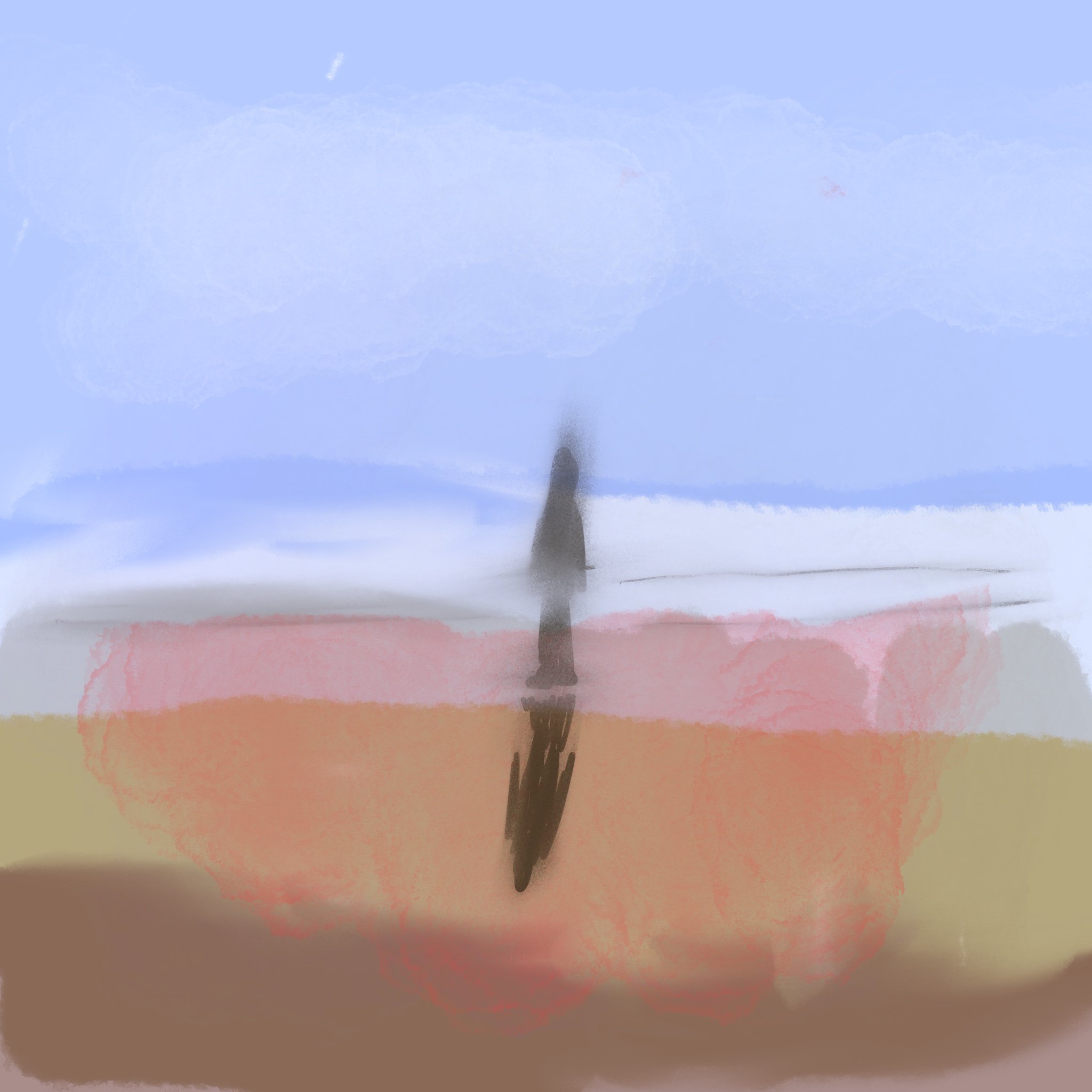
And with this, I find myself asking: how do I keep engaging in this act of portraiture—looking, witnessing, mark-making, looking and witnessing—rendering ourselves and (our)stories visible in spite of erasure? How do I/we see ourselves and publicly mourn for all those who have been impacted by Melissa in Cuba, Haiti and Jamaica, directly and indirectly, so that we are not erased in the atmosphere of silence—so that we are not erased in the atmosphere of silence—so that this does not become another loss, on the mountain of disenfranchised and unacknowledged grief in Black Atlantic communities.
About the writer
 Omikemi is a London-based sea-stalking writer and poet of Jamaican heritage. They work at the intersections of somatics, embodiment and spiritual direction, with a focus on the emotional and mental well-being of Black Queer communities.