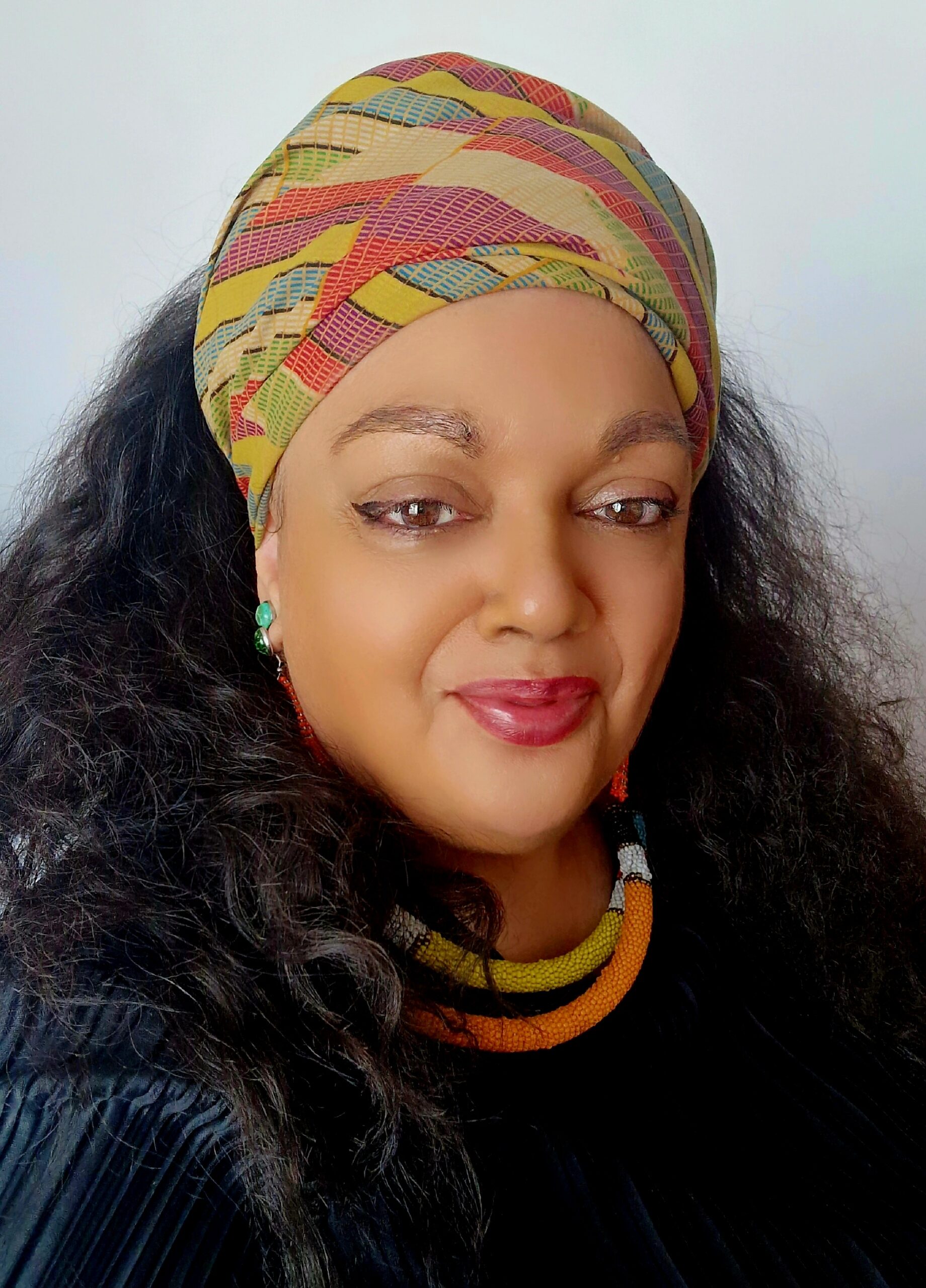
Zita Holbourne is a multidisciplinary artist, human rights activist, and lifelong trade unionist. She shares her insights into the organisations that can offer support to those working in the creative industries – from advice on rates of pay, contracts and insurance to negotiation skills and legal representation if things go wrong.
As a lifelong trade unionist, I would fully encourage writers and other creatives to join a trade union. However, there are also a range of literary and arts associations providing services, advice, networking and support that are worth joining too.
I am a member of both types of organisations: I work freelance for two unions, co-lead a trade union, am a fellow of one association and am a member of three others. I have been a member of several unions over the years, become an activist in all of them and a leader in two.
My first union was the Graphic Media and Paper union which no longer exists, as many smaller unions amalgamated into what became known as ‘super unions’. I was the National Vice President of the Public and Commercial Services Union, and I am the current Joint National Chair of the Artists’ Union of England.
Amongst my union roles, I am co-chair of Public Services International (a global trade union federation), Education Support and Culture Workers Network, and elected to the National Executive Committee of the General Federation of Trade Unions, a UK-wide trade union federation.
During my 30 years of involvement in trade unions, I have worked to build equality structures and tackle discrimination, amongst other responsibilities. For several years, I was elected to the Trades Union Congress Race Relations and Women’s Committees. I have been involved in setting up trade union equality initiatives across Europe as well. Many unions have structures for members who face discrimination, for people of colour/black members, LGBT+, disabled, women and young members.
I am also part of arts and literature associations, a fellow of the Royal Society of Arts, a member of the Royal Society of Literature, and one of 200 founding members of the Black Writers Guild.
Finding the union that’s right for your needs
Unions and associations serve different purposes, so it is important to consider what you want to get out of them, what your needs are, and how they might benefit you. Of course, not everyone wants to get actively involved in the membership-based organisations they join. You might want to join for the services they provide, but factors such as the services and support they give and how you might get involved are factors to consider.
You may conclude that you want to join a mixture. If, like me, you are a multidisciplinary creative, then it might be that there is more than one trade union you could potentially join. Some unions have joint membership schemes too. You might want membership of a few, or choose to join one that reflects the bulk of your work focus.
The reason I advocate for joining at least one trade union that relates to your profession is that trade unions can provide advice and representation if you have a problem at work. Trade unions also traditionally carry out collective bargaining to negotiate pay, terms, conditions, equality policies, etc. with the employers they have recognition agreements with, on behalf of all workers.
However, for many of us working in the creative industries, our work is precarious and freelance, so we do not have a set workplace. In my view, that is even more reason to join a union, as freelancers are more likely to experience low pay, pay inequality, and exploitation. Trade unions provide advice on rates of pay, contracts, etc. and if you run into a problem, they can provide advice and representation. Unions can also provide helpful services such as public liability insurance, subsidised household and travel insurance, training, legal advice, and opportunities to connect with other members. Being a member of a union gives you a voice and a democratic right to vote on policies, in ballots, and for who represents you.
Associations may provide some services as well. They are likely to have a specialist focus and may provide advice, resources, and valuable networking opportunities. They will often put on events and activities and that might help you to navigate the industry they focus on.
The lists below are not supposed to be exhaustive, but to give you an overview under two separate headings of Trade Unions and Associations for writers and other creatives. I have listed them alphabetically for ease, and only included those based in the UK.
I have provided a brief description of each to give you an overview of their focus but, of course, there is much more information on their websites, including details of how you can join and what the cost is to do so.
Trade Unions
Artists’ Union England (AUE)
Artists’ Union England represents artists working across visual art, applied arts, socially engaged art, moving image, sound, and performance.
BECTU
BECTU represents workers across broadcasting and media, excluding actors and musicians. The union represents employees and freelance workers, spanning full-time and part-time staff, project workers, contract workers, casuals and dailies.
Equity
Equity represents actors, performers, and creative practitioners, collectively bargaining for fair terms and conditions in the performers’ workplace. Their members consist of actors, singers, dancers, set designers, directors, stage managers, puppeteers, comedians, voice artists.
Graphics Union
The Graphics Union provides support and a discussion forum for freelance graphic designers working within the UK film and television industry. They are primarily for those working on anything from projects for independent and small budget productions, to internationally released major motion pictures and high-end television.
Musicians Union
The Musicians’ Union is the trade union representing musicians across the UK working in all sectors of the music business. They negotiate with all of the major employers in the industry on behalf of their members
National Union of Journalists (NUJ)
The NUJ represents workers across the media – from newspapers, broadcasting, and book publishing, to magazines, websites, mobile devices, social media and PR agencies. Their members work across a range of disciplines, including reporting, writing, photography and editing, to design, videography, communications and presenting. Freelancers, students, as well as part and full time staff are all welcome to join.
Praxis
Praxis is the Artists’ Union of Ireland, representing artists of all disciplines and is committed to giving artists strategic power and improving working and living conditions.
Public and Commercial Services Union
PCS organises workers in National Museums and Galleries and Historic Palaces doing a range of jobs including gallery assistants, shop workers, café and restaurant staff, security guards, and cleaners.
Scottish Artists’ Union
Scottish Artists’ Union are the representative voice for working visual and applied artists in Scotland. They campaign for arts funding to directly support visual artists and arts activities – all whilst defending artists’ pay, rights and expanding benefits.
Society of Authors
The SoA is the UK’s largest trade union for all types of writers, illustrators and literary translators at all stages of their career.
The Writers’ Guild of Great Britain
The WGGB represents professional writers in TV, film, theatre, radio, books, comedy, poetry, animation, and video games. Their membership also welcomes emerging and aspiring writers.
Associations
Authors Licensing and Collecting Society
ALCS makes sure you receive the money you are entitled to as a writer when someone copies or uses your work – anywhere in the world.
National Association of Writers and Groups
NAWG helps with setting up writers’ groups.
National Association of Writers in Education
NAoWiE is a charity. They support writers whose work has an educational element and are constantly working to develop best practices for the teaching of Creative Writing.
Royal Society of Arts
RSA is a charity made up of nominated and invited fellows: a global network of changemakers focusing both on arts and creativity, and social change too.
Royal Society of Literature
RSL is a charity which celebrates and supports writers and is a membership-led organisation.
The Black Writers Guild
The Black Writers Guild was established in 2020 to hold the literature industry to account. The Guild represents professional and emerging British writers of Black African and Black African-Caribbean heritage.
I hope the above list will prove helpful in giving you an overview of the range and scope of trade unions and associations you might want to engage with as writers and other creatives. Through my own trade union and activist journey, I have gained from trade union training and qualifications, and developed a broad range of experience and skills which have benefited me both as an activist and in my professional life as a creative. Being a member of unions has also meant I had access to support and representation, including legal representation against discrimination and for a personal injury. Being part of associations has been beneficial in terms of recognition of my achievements in the sector and having the support of a broad network of professionals in the same field. Joining either type of organisation can mean we are less isolated and have the power of collectivism.
 Zita Holbourne FRSA is a multi-award-winning human rights and equality campaigner/activist, trade union leader, and multidisciplinary artist – visual artist, poet, author, writer and vocalist. Zita is the co-founder and National Chair of BARAC UK, the joint National Chair of the Artists’ Union England (AUE), Joint National Chair of Public Services International Education Support and Cultural Sector workers network, part of the Coalition of Artists for the General History of Africa and curator of the TUC Roots Culture Identity Art Exhibition.
She is the author and illustrator of the book, Striving for Equality, Freedom and Justice, a collection of poetry, published by Hansib, one of the UK’s oldest Caribbean publishers, co-author of the book Roots and Rebellion (JK Publishers, February 2024), a contributor to New Daughters of Africa and one of 17 British women featured in the award-winning book Here We Stand Women Changing the World. She has contributed to over 40 books.
Zita has exhibited her art, performed/read, and spoken internationally. Her globe sculpture, created for The World Reimagined, entitled Still We Strive, is permanently located at the Black Cultural Archives in Brixton, London, UK.
Zita works with Writing Our Legacy as a mentor, workshop facilitator and guest editor.
She has worked as an equality advisor and judge for the European Network of Cultural Centres and was a keynote speaker at their international conference in 2024. She was made an honorary fellow of the University of Wales Trinity Saint David in 2024, is a fellow of the Royal Society of Arts, a member of the Royal Society of Literature, The Black Writers Guild and an elected member of the Royal Historical Society.
Awards and recognition she has received include Winner of the Diversity Awards Positive Role Model for Race, Legacy Awards Lifetime Achievement Award for Equality Champion, runner up in the Sheila McKechnie Campaigner of the Year Awards 2022, listed by the Ethnicity Awards in the top ten list for campaigner/ political figure of the year, shortlisted for a Lifetime Achiever Award, National Diversity Awards 2023, Global Diversity List 2023, Outstanding Global Arts and Culture and Best Global Community Influencer, Caribbean Global Awards 2023 and winner of the Jessica Kingsley Writing Prize 2023.
Zita campaigns for equality, freedom, justice and human rights through arts and activism.