what didn’t you do to bury me
but you forgot that I was a seed
Dinos Christianopoulos
from The Body and the Wormwood (1960-1993)
translated from the Greek by Nicholas Kostis
Seeds of the Atlantic Slave Trade (Seeds) – a cross-genre arts project by African Night Fever
in partnership with Writing Our Legacy and Black History, funded by Brighton & Hove Council
as part of the Exhale Creative Grant – used music and poetry to respond to the enslavement
and survival of African people in the Caribbean and Americas. Local historian-activists
Bert Williams and Suchi Chatterjee conducted extensive research into this ancestral
journey. The slave trade was carefully documented in ships’ manifests, diaries of plantation
owners and ship’s surgeons and, most importantly, first-hand accounts by enslaved people.
While such documentation is easy to find and freely available on the internet (see annotated
list of sources at the end of this piece), sitting with its meaning is painful but necessary. The
history they uncovered and I summarised prepared the ground for study and improvisation by
three generations of poets and musicians who rehearsed at weekly sessions. These grew into a
moving and powerful series of songs and poems which they performed at Black History Month
Family Day at Brighton Dome on 11 November 2023.
This creative response brings us closer to those ancestors and their determination to live in
dignity and in relationship with the lives they were torn from. As in the words of Dinos
Christianopoulos, queer Greek poet ostracized and unrecognised for his work in his lifetime, the
seeds of that experience – the ancestors’ powerful creative practice and the people themselves
– are the legacy this project embodies, even in its form echoing the collective, collaborative
nature of those ancestors’ survival.
Artist Adriana Lord’s poem ‘Maroons’ Song’ responds to this legacy with an urgent opening
series of questions:
What should I do should I run?
What should I do should I fight?
What should I do should I kill?
What should I do should I die?
The body of the poem-song answers those questions by illuminating the experience of the
enslaved from the inside out. Its power comes from the unflinching clarity of voice and imagery
and draws from a rich seam of Yoruba and Edo cultures of West Africa. Adriana’s poem calls up
Olokun – orisha of the deep ocean – and Yemaya – orisha of rivers and the ocean accessible to
humans, a protective and fierce mother – both major water deities in West African cosmology,
one of the sources that sustained enslaved people in the Caribbean and Americas.
Seeds bears witness and responds to the suffering and survival of those ancestors by
recognising not only their suffering but also the ways they found, despite every obstacle, to
thrive. What makes this history bearable to contemplate – the transformative thing – is the
golden thread of resistance running through it. Resistance took many forms: slowing down
work, breaking tools, stealing food, illness, sabotaging crops, poisoning enslavers or practicing
birth control, as well as escape and revolt.
In this brutal context, maintaining culture was also resistance. As Adriana’s poem attests, music
rooted in varied musical traditions and religious beliefs connected enslaved people and helped
them communicate with one another as well as maintain links with ancestors, spirits and gods.
Over time these songs and practices shaped the culture of the Americas and the Caribbean.
Drums were central to this practice and also in organizing resistance (see also here).
For enslaved Africans, singing and making music were powerful forms of resistance, sustenance
and survival.
This project brings us closer to Brighton’s aspiration to become an anti-racist city by
acknowledging the many ways our present is indebted to this painful past. Bert and Suchi’s
research shows how the slave trade enriched this country – the labour of enslaved people
created fortunes for people from all walks of life, from absentee plantation owners across the
UK, including Brighton & Hove (see UCL’s Legacies of British Slavery database), to the Crown.
Understanding how the past shapes our present is vital for a just society. We are not there yet,
but artistic collaborations like this are the powerful basis for its creation. I hope we will see this
work again – and more like it, exploring the colonial present – in Brighton and beyond.
Dulani Kulasinghe
December 2023
Links for further reading:
National Archives
Searchable guide to archival material on enslavement and the trans-Atlantic slave trade
British Library
articles on enslavement and abolition
International Slavery Museum Liverpool
Summary of period and extensive links to relevant learning and research centres in the
Caribbean and US
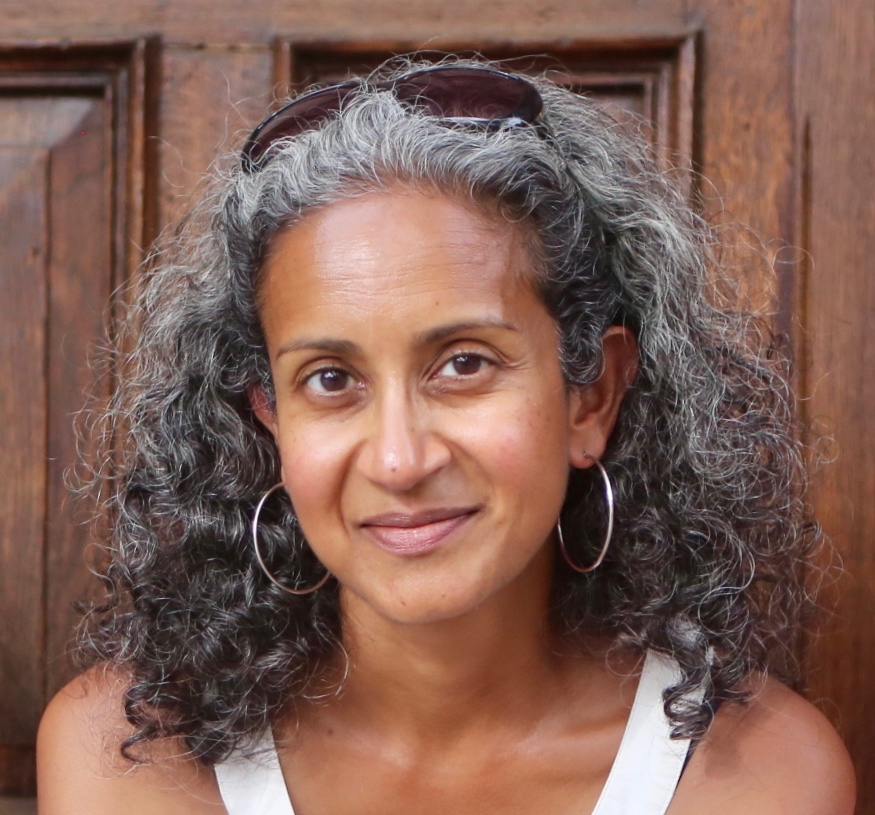
Dulani Kulasinghe is an American of Sri Lankan heritage living in Brighton.
Her writing explores contested histories, belonging and legacies of empire, and has been
published in the anthology Hidden Sussex and used by Sussex University and in local schools.
Her awards include a Developing Your Creative Potential grant from Arts Council England and
an R&D bursary from Writing Our Legacy/South Downs National Park to explore new stories
in the Sussex landscape. Her site responsive piece about the Chattri was commissioned as part
of Witness Stand, a Brighton Festival 2022 production. She is part of the inaugural cohort
of New Writing South Fellows and a member of Writing Our Legacy.